

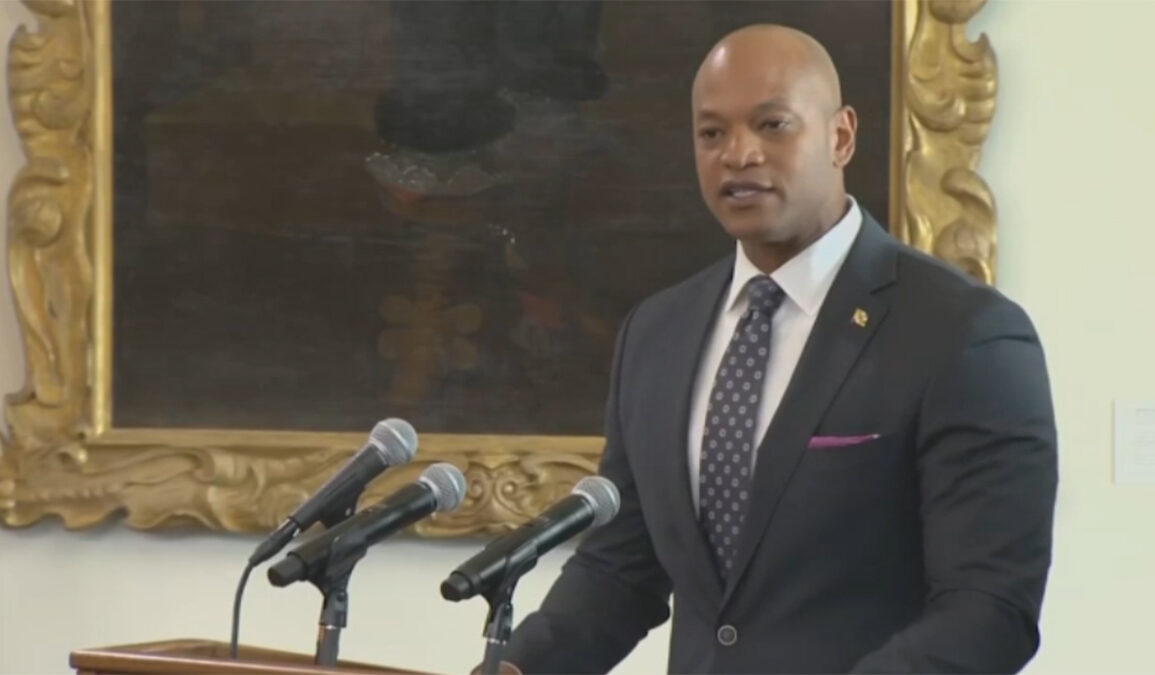
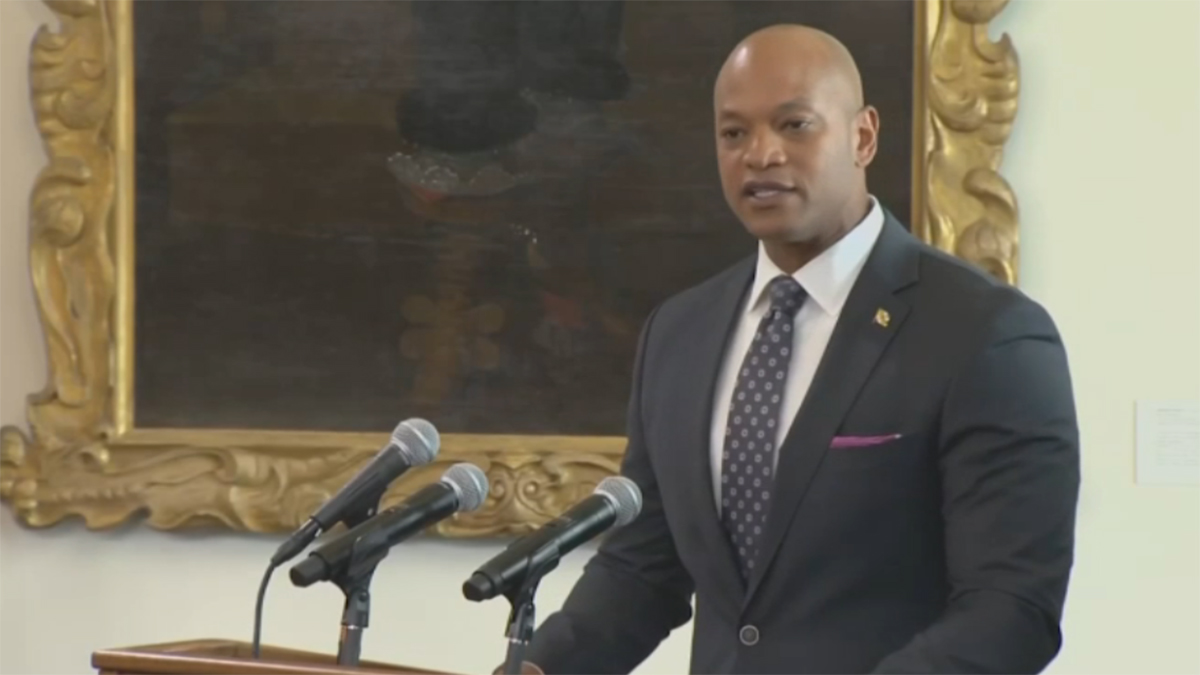
Maryland Gov. Wes Moore will pardon thousands of cases of cannabis possession in the state, he announced Thursday.
The governor made the announcement at a Juneteenth event and also announced a new program to increase race-based equity.
In an interview with News4 earlier this week, Moore called these initiatives part of the “work of repair” he said is necessary to address ways communities of color have suffered from the systemic impacts of racism.
He answered questions on reparations, his work to close racial equity gaps, Commanders stadium plans and whether he’ll run for president.
Moore announced he’s directing more than $400 million toward historically underserved neighborhoods in Maryland – an effort he said is designed to raise appraisal values and increase homeownership in disenfranchised communities.
Under the JUST Communities program, 419 Census tracts will receive special consideration when competing for state funding.
According to Moore’s office, qualifying communities must have histories of redlining, impacts from highway projects, high state imprisonment rates or unequal exposure to environmental or health hazards. In Montgomery County, 36 communities will receive the designation. In Prince George’s County, 89 will receive it.
Moore is issuing nearly 7,000 new pardons for misdemeanor cannabis convictions. Last year, he signed a clemency order pardoning 175,000 people whose cannabis charges he said posed an unjust barrier to employment.
“This is one of the most aggressive home-ownership pushes for the Black community that we have seen in our state’s history,” he told News4 earlier this week.
“It’s about access. It’s about inclusion. And it’s about wealth. Because that is the issue that we’ve got to address when it comes to this work of repair,” he continued. “What are we doing to address wealth and the wealth gap? And I’m really excited that Maryland again is moving more aggressively on this issue of ending the racial wealth gap than any other state in the country.”
The governor has been heavily criticized for vetoing a bill that would have created a commission to study the harms caused by slavery. He said these efforts are designed to help those communities now.
What Moore said about reparations and closing racial equity gaps
Moore defended his recent decision to veto a bill that would have created a commission to study slavery reparations in the state. His decision angered some state and congressional lawmakers, as well as groups that traditionally support Democrats.
“I have a deep respect for the General Assembly and the Black Caucus and the work that they’ve done. I just think we have a fundamental disagreement on how to get to the same ends,” he said. “The legislation calls for two years of scholarship, then bringing recommendations to the governor in two years. My point is this: I am the governor, and I don’t need two years. I want action.”
Maryland Gov. Wes Moore defended his recent decision to veto a bill that would have created a commission to study slavery reparations in the state. In an interview with News4’s Shawn Yancy, he also spoke about the future of the Commanders’ stadium in Prince George’s County.
The governor pointed to initiatives lawmakers have undertaken in Maryland to close racial equity gaps, including:
- investing more than $1.3 billion in Maryland’s HBCU system, though some of this stems from a lawsuit settlement signed under former Gov. Larry Hogan
- directing more than $800 million in state contracts to Black-owned businesses
- increasing property values and homeownership in historically redlined communities.
He said he’s focused on repairing systems.
“Racism is not an act. Racism is a system,” Moore said. “It’s a system that has allowed an eight-to-one racial wealth gap in the state of Maryland. That’s not because one group is working eight times harder. It’s a system that has allowed children to attend schools that was not preparing them for either college nor careers. It’s a system that has allowed environmental injustice. It’s a system that’s allowed transportation deserts. We’ve got to fix systems.”
What Moore said about Commanders’ stadium plans
In D.C., the D.C. Council is debating whether to remove from their budget part of the deal to build a new Commanders stadium in the District. They may vote on that separately. Mayor Muriel Bowser said that could lead to delays and allow the team to start negotiating with Maryland or Virginia.
Moore wouldn’t say whether he’s in talks with the team.
“I want to make sure that that area is better than what it is right now, with the Commanders there or not,” he said. “But my goal is to make sure that the people of Prince George’s County – they deserve better than what they have right now.”
What Moore said about whether he’ll run for president for 2028 – and Democrats’ future
Moore made history two years ago, when voters elected the political newcomer the first Black governor. His star power has risen within the Democratic party and he has been mentioned as a presidential frontrunner.
He has repeatedly said he’s not running for president. When News4 sat down with him, we got the question out of the way.
“I will not run for president in 2028,” he said. “But I will go anywhere and everywhere to talk about the importance of Maryland and to tout what Maryland’s doing.”
He said that’s the reason he has been making the rounds to talk with Democratic groups across the country. He has traveled to key swing states including Michigan and Pennsylvania, and to South Carolina, the first state to vote in the Democratic presidential nomination process.
Maryland Gov. Wes Moore sits down with News4’s Shawn Yancy to discuss his future as a politician, including whether or not he intends to run for president in 2028.
In a speech at a Democratic fundraiser in South Carolina, Moore said Democrats must take cues from President Donald Trump. News4 asked what he meant.

“I think that we have to be honest about the fact that Donald Trump is a fantastic vessel for the frustration. He is not a vehicle for the solution,” Moore said. “[…] While I will always call out my multitude of disagreements with the president of the United States and the way that he has handled this job in such a short period of time, I also know this, is that he moves with a sense of urgency.”
He said he is not trying to take a leadership role within the Democratic party.
“I don’t think it’s my job to tell the Democratic party what to do,” he said. “[…] I think that anyone who’s talking about 2028 or 2026, frankly is not taking 2025 very seriously.”
Moore said he plans to run for reelection as Maryland’s governor. That said, he’s reportedly scheduled to speak later this month with Detroit’s NAACP, as well as other groups.