

What Nora Green, a junior at Charleston County School of the Arts, has found most interesting about what she has learned in her U.S. history class is how anti-Black prejudice transforms over time.
From the colonial period to the present day, she has learned how racism and prejudice persist, though they assume different forms, she said.
“Even when slavery was abolished it was replaced with sharecropping,” she said. “Now we’re learning about segregation … and it just continues on.”
Red lining. Discrimination in lending. Mass incarceration. Underfunded schools. Police violence.
Jason Williams, a social studies teacher at Academic Magnet High School in North Charleston, noted how students find it shocking to consider how relatively recent events like the civil rights movement are.
“Once you’ve connected a kid to the idea that, for example, their teacher’s mother lived in that movement, it just blows their mind.”
Williams, a White educator, said that whether or not you are African American, Black history is part of everyone’s history. Today, many educators say that teaching the subject, which has always been inconsistently done, has become more challenging, and even dangerous, due to the potential for acute political backlash against discussing matters of race.
The federal government seeks to root out any mention of diversity, equity and inclusion, and state laws restrict how race as a topic can be presented in schools, leaving educators uncertain about what topics they can safely broach with students and whether certain conversations could put their school’s federal funding at risk.
A Feb. 14 memo from the U.S. Department of Education Office for Civil Rights set a two-week deadline for K-12 and colleges to end their DEI programs. The letter, written by Acting Assistant Secretary for Civil Rights Craig Trainor, stated that educational institutions have “toxically indoctrinated students with the false premise that the United States is built upon ‘systemic and structural racism’ and advanced discriminatory policies and practices.”
The effort to control what teachers can and cannot do in the classroom also has been taken up by some of South Carolina’s Republican legislators.
A budget proviso that has been renewed annually since 2021 prohibits using state funds to promote “the belief that one race or sex is superior to another, that an individual is inherently racist or sexist or that someone should be discriminated against because of their race or sex.”
It also prohibits the teaching of concepts such as “unconscious racism and sexism or that an individual should feel discomfort, guilt, anguish or any other form of psychological distress on account of his race or sex.”
The proviso resulted in the removal of books by Black authors in schools and the cancelation of an Advanced Placement African American Studies class last year. It is now being challenged by the S.C. NAACP through a lawsuit against state Superintendent Ellen Weaver and two Lexington County School Districts.
A state Department of Education spokesman called the suit meritless and said the department will “continue to seek meaningful opportunities to build bridges across divisions, honor the richness of our shared history, and teach it with integrity, all while ensuring full compliance with state law.”
Another provision, added to the in-the-works state budget by the House Ways and Means committee Feb. 18, would forbid state agencies or subdivisions, including colleges and school districts, from having diversity, equity and inclusion programs.
The one-year law would bar those agencies from having an office that promotes diversity, equity and inclusion, from giving employment preference based on race, gender or sexual orientation and from requiring diversity training or statements. It wouldn’t apply to academic courses, research, student organizations or guest speakers, and it has a carve-out for steps necessary for schools’ compliance with antidiscrimination law or accrediting processes.
The House’s budget package passed the Ways and Means committee Feb. 19, sending it to the full chamber.
All this political pushback has made the job of teaching American history fraught with potential dangers. Black parents are becoming increasingly distrustful of a public education system that now goes out of its way to either avoid what they consider critical topics or teach a diluted and cursory version of them.
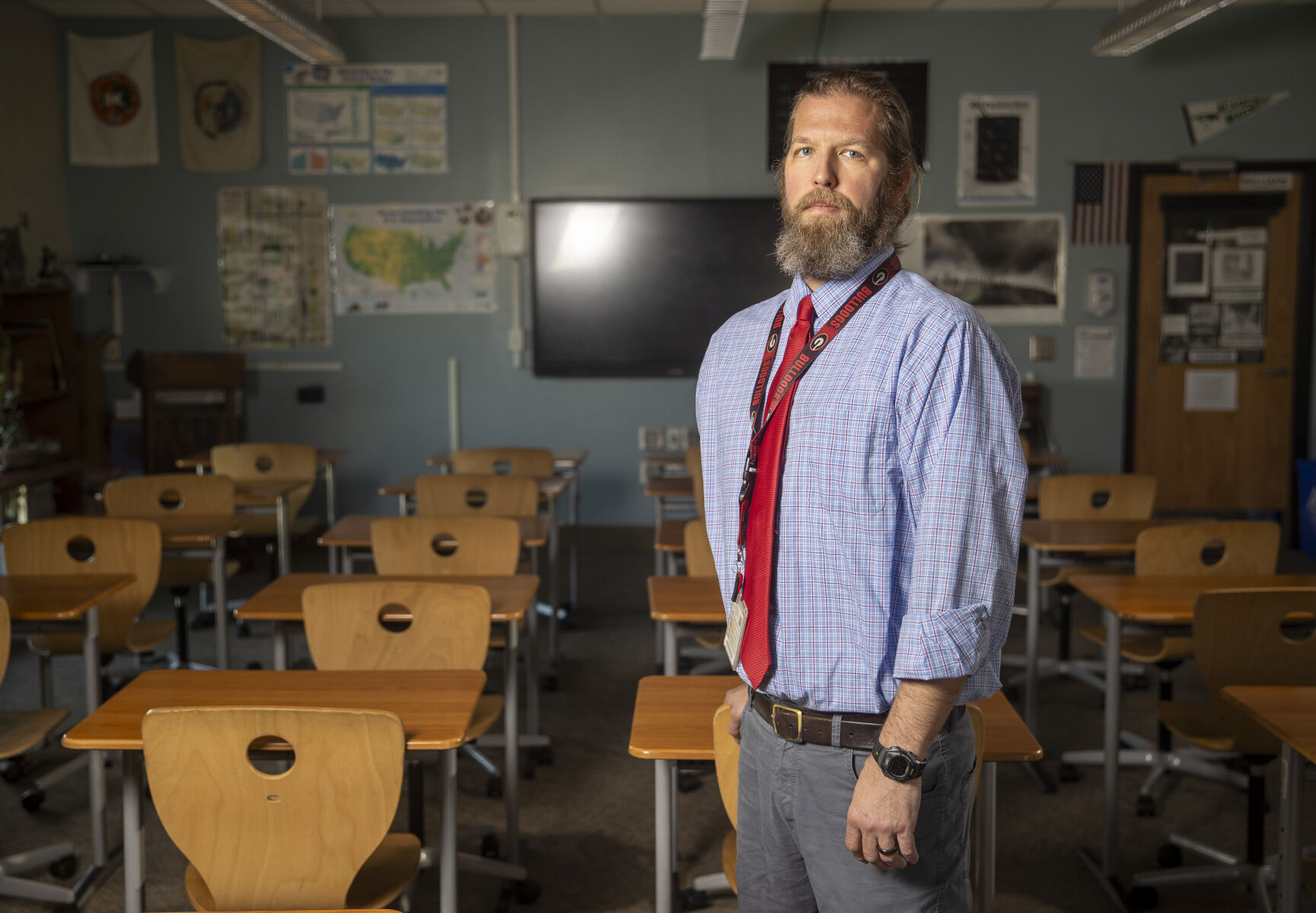
Jason Williams, a social studies teacher at Academic Magnet High School used to teach AP African American Studies before the class was halted by the South Carolina Department of Education last summer. “Once you’ve connected a kid to the idea that, for example, their teacher’s mother lived in that movement, it just blows their mind.”
Fundamental problems
While South Carolina’s social studies standards include lessons about the African American experience over the centuries, students, parents and teachers who spoke with The Post and Courier agreed that the information taught is not comprehensive and lacks depth.
Arriyana Whitaker, a former social studies and AP African American Studies teacher at Wando High School in Mount Pleasant, said a lot of information regarding Black history is left out of regular history lessons and that the focus is often on the same historical figures, such as Rose Parks or Martin Luther King Jr.
“There is more to the story that students don’t get to learn, which really is a disservice,” Whitaker said.
Williams, who teaches an honors version of the AP African American Studies course at Academic Magnet, said major figures and events in the history curriculum often are White males of European descent, leaving the picture incomplete. Since the curriculum leaves out so much information, teachers try to find ways to include some of it, but that can be difficult because they already need to squeeze a lot of content into a short lesson period, he said.

Arriyana Whitaker’s AP African American Studies class at Wando browse an interactive map at the International African American museum May 22 in Charleston.
“You talk to any U.S. history teacher and they will tell you it’s a race to the finish line to try to get all the standards in and get to everything in one school year or even a semester, so if you add something in another thing would have to go,” Williams said.
Adding to the challenge is the animosity toward educators that some parents express over conversations about race in the classroom, as well as the political backlash, he said.
“I think some teachers find it hard because nobody wants to find themselves featured on somebody’s Facebook or (to have) parents shouting at them about indoctrination,” he said.
LaGarrett King, an associate professor of social studies education at the University at Buffalo, discovered through his research that educators always have struggled to teach Black history, and the political backlash has hampered the process. This has led to an incomplete understanding of it on the part of students, he said.
Educators attending the annual Teaching Black History conferences King hosts at the University at Buffalo often express confusion or fear about teaching Black history, he said. Some say they limit their lessons to focus only on what students need to know to pass a state test.
King said that, historically, teachers have focused on what he called the triad of Black historical experiences: enslavement, Reconstruction, and the civil rights movement, with particular emphasis on Black leaders such as Martin Luther King Jr. and Rose Parks. But this approach fails to fully contextualize who those people were.
“If the curriculum says ‘You need to teach about these particular people,’ then those teachers, who may not be well versed in Black history education, will only teach (about) those individuals,” he said. “So in many ways, you don’t get the full story of Black America, you don’t get the voices of Black people, you get what others want you to believe about Black people.”
Whitaker, who is Black, said she is eager to share her knowledge with students and others in her community.
“I feel like it’s my duty, to some degree, to actually share that information whenever possible, because it’s helping us all become better citizens and learn how to navigate different spaces, not just within the Black community but in society as a whole.”

Rep. Jermaine Johnson, D-Hopkins, speaks at Clarendon County’s South Carolina Democratic Party’s Community Check-in held at Trinity Full Gospel Church in Manning Monday Sept. 30, 2024.
Erasure of history
Williams said he believes the political backlash against classroom discussions of race is rooted in the belief that the U.S. is the proverbial “City on a Hill,” a beacon of democracy, and ideal that others want to emulate. The experiences of African Americans and other marginalized groups in the country are in direct conflict with that concept, he said.
“For example, our founding fathers wrote that men are created equal, yet they owned slaves,” he said. “That’s why some people find it hard, because they feel you’re bad-mouthing George Washington or Thomas Jefferson — and it’s not about that, it’s about being honest about where we came from, where we are and where we’re going.”
House Rep. Jermaine Johnson, D-Hopkins, said the current political climate is an obstacle to teaching history fairly and accurately.
“The example I always use is the partnership between the S.C. Department of Education and PragerU,” he said.
Johnson referred to a Christopher Columbus cartoon video on the platform, which suggests it was better to be a slave than to die, discounting the thousands of enslaved people who felt otherwise, throwing themselves into the water or sacrificing their children to avoid living in bondage.
The Department has made the platform’s content available on its website as optional resources for schools. State Superintendent Ellen Weaver has described it as a high-quality, time-saving resource that “breaks down barriers and provides access to some of the most incredible content I’ve seen on this topic.”
“Our higher-ed education colleges are way more focused on woke politics, sadly, than on giving our teachers those foundational skills that they need to have to be a good teacher,” Weaver said in a Sept. 16 announcement of the Department’s collaboration with the PragerU.
Political pushback
Political debates over the teaching of Black history are nothing new, King said.
Ever since the Civil War, Black educators tried to promote Black history, encountering resistance from White citizens, he said. In the 1920s, likely because of scholars, educators and activists such as W.E.B. Du Bois and Carter G. Woodson (who started Negro History Week, which became Black History Month), White educators and politicians began to accept the teaching of certain subjects, King said. The life of George Washington Carver and other stories of Black uplift were OK, but not Denmark Vesey and the history of Black rebellion.
“Certain politicians and conservative political groups promote a version of history that’s more aligned with American exceptionalism — without concepts of racism, white supremacy or that critique the ways society is run — instead of a more complete, holistic and what I would call a humanistic Black history.”
King said a humanistic Black history would put the voices and lived experiences of Black people at the forefront.

Nora Green, a junior at Charleston County School of the Arts, poses for a photo at Charles Towne Landing Thursday, February 20, 2025 in West Ashley.
Whitaker, now a teacher in North Carolina, tells her students to take note as they read textbooks of which voices are not represented. These books, she said, tend to emphasize the perspective of the victors.
“Those are the people who ultimately get to write the history for us to study, so if you’re on the losing side of history, your story probably won’t ever get told, or it will just be buried, misconstrued or only few parts of it will be told,” she said.
Johnson said he rejects the argument that teaching Black history should be limited because it makes White students uncomfortable or feel ashamed of who they are.
“I think we need to remove our own fears, because these kids don’t have any fear; it’s adults who instill it,” he said. “I don’t think we as adults are supposed to stifle the growth of our young people.”
Williams said no student in his classroom has felt personally responsible for historical tragedies or systemic racism.
“There is no reason why (students) should feel like fingers are being pointed at them, because they didn’t make those decisions,” he said. “We are just living with the consequences.”

Students from Wando High School took a field trip to the International African American Museum, May 22, 2024, in Charleston. “I took the class because U.S. history doesn’t always cover the Black experience,” said Sam Rees, 18. “In this class, we learned about how abundant and innovative African kingdoms were.”
Increasing distrust
For four decades, South Carolina has required public schools to teach aspects of Black history as part of their social studies curriculum.
The Education Improvement Act of 1984 mandated the teaching of Black history starting in the 1989-1990 school year and established rules to incorporate it in textbooks and other materials.
Conservative politicians often use these mandates to claim they are not restricting or banning Black history from classrooms, but they are promoting an incomplete, and sometimes inaccurate, version of that history, King said.
This observation was shared by Luberta Dawson, the mother a sophomore student attending Burke High School in downtown Charleston.
For Dawson, the public education system makes an inadequate effort to consider and to convey how Black history is part of the woven fabric of the American experience. She wishes her sons would learn a comprehensive and honest history of Black America. Instead, what little they learn is too vague and whitewashed, she said.
Dawson said she did not learn about Black history until college.
“I was an adult before I really learned the true evil and violence behind slavery,” she said.
So she has chosen to take matters into her own hands and teach her children what they are not able to learn in school, including the way history repeats itself, and the dangers that presents.
The current political attacks on Black history, identity and equity creates anxiety that turns into frustration, anger and rage, Dawson said. The only thing she can do is keep her children informed, she said.
Nora Green at the School of the arts said to learn more about her ancestors’ history, she engages in conversations with her grandparents and works with the International African American Museum, where she sits on the Youth Advisory Council.
Her goal is to become a doctor and minor in African American Studies in college. She has already enrolled in the honors version of the canceled AP African American Studies class that Charleston County School board members approved last year.
“When the counselor said I could take it, my mom immediately saw my face light up,” she said.
Education Lab reporter Ian Grenier contributed to this report from Columbia.