

Medell Briggs-Malonson explains how factors like the stress of racism and diet during slavery contribute to poor health
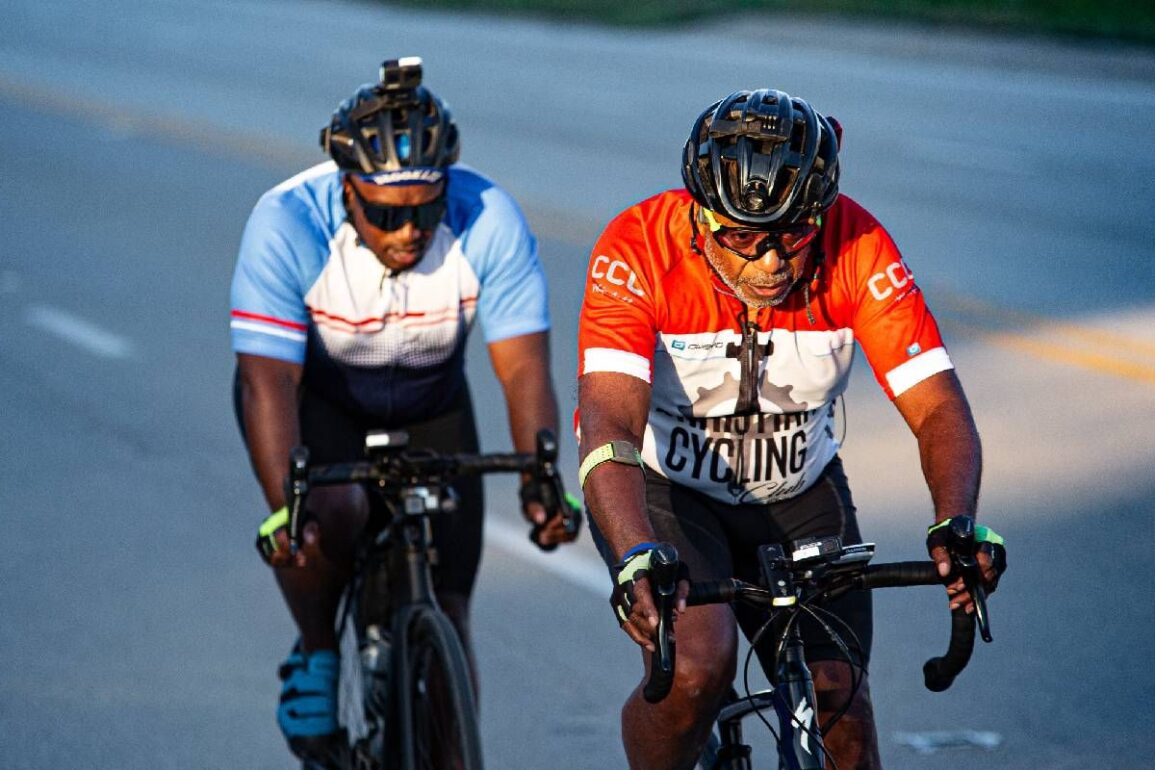
I first became aware of Medell Briggs-Malonson, M.D., when I saw her in the PBS Independent Lens film “Bike Vessel,” which documents and celebrates a turnaround in health for a 70-year-old Chicago-area man who survived three open-heart surgeries.

Trained in emergency medicine, Briggs-Malonson also has advanced degrees in public health and in health care leadership. Currently, she is chief of health equity and inclusive excellence at UCLA Health. She is one of three health professionals featured in the documentary, and she’s eloquent in making the case that racism is a contributing factor to bad outcomes for heart health, and health in general, in the Black community.
I reached her by phone in Los Angeles. These excerpts from our conversation are condensed and lightly edited.
Next Avenue: Tell me first about stress, which can be caused by racism, and how that affects heart health.
Medell Briggs-Malonson: All of us as humans, what we know is that our biology is 99.9% the same. And one thing that we know about our biology is that we have normal stress responses any time we are faced with challenging circumstances or we’re thinking about survival. It goes all the way back to our ancestors, where we had the fight or flight response, that when you see a predator or something that may harm you, your response is automatically: Do I flee or stand my ground? So, any time there’s a stress response — it can be all the way from a classroom to the board room, to even being at home or in your community — our bodies react in that same way of fight or flight.
And what occurs is that [hormones are released] in our body that actually cause our heart rate to go up, making sure that we are ready to jump into action.
“We know there’s a history of mistreatment when it comes to different populations of color and women [of all races] that has been clearly documented in our medical literature.”
What we know from many studies is that when individuals are faced with racism or any other form of discrimination, that same exact physiologic response — that fight or flight response — kicks in. And therefore, if you are a person of color, and you have experienced a lifetime of racism in various different scenarios of your life, that means those chemicals are activated at higher rates. That means your heart is at a higher rate; that means your blood pressure is at a higher rate. And that causes stress on the anatomy of your heart and all the arteries. And that can lead to increase in cardiovascular disease. That’s what we know does definitely happen, especially in Black men and women and other people of color when they’re faced with racism and other forms of societal challenges.
Let’s talk about something else you mentioned in the film, which is the idea that people in communities of color may not trust the medical establishment. It may not have served them well.
Well, I think it’s a combination of several items. We know there’s a history of mistreatment when it comes to different populations of color and women [of all races] that has been clearly documented in our medical literature. And sometimes those stories carry on from generation to generation. There may be a saying in the community about, ‘Hey, be careful if you go to that hospital because ABC may happen to you and you may not leave the hospital.’
Stereotypes and Assumptions
But we also know that even today, there are experiences that individuals have, especially when they’re people of color, women, people with disabilities, non-English speakers, where that mistreatment may occur, whether it’s intentional or unintentional. From all the years doing the work, I try to make sure that everyone, regardless of their identity, regardless of where they live, regardless of what they look like, receives the most compassionate, high-quality care.

Stereotypes and assumptions can also be passed down from generation to generation of health professionals. And that’s where the work must be done: let’s pay attention and practice high-quality medicine for everyone. Let’s make sure that we’re communicating as well as addressing the needs of each person as an individual. Let’s ensure we understand our own biases because every single one of us has biases, but it’s all about how they show up.
You also talk about diet and I’ve never thought about the idea that diets in the Black community today are still influenced by what was fed to Black men and women during the time of slavery.
So, when it came to chattel slavery — and that’s why it’s called chattel slavery because it’s very similar to having any other type of chattel property whether it’s oxen or another type of livestock — diets were conceived to maximize work. It was the scraps of the good food that were actually provided to the slaves to keep their energy up but at very low cost, very low quality. So when as a point of survival many of the slaves began to take whatever food they were given because they didn’t have any other options, they seasoned it to try to make it taste better, for example, with salt. And salt is directly connected to high blood pressure and other forms of vascular disease and strokes.
[Focusing on healthier, culturally appropriate diets] is a lot of the work that we do in community health. It starts with understanding the history [and then] we move to healthier alternatives, healthier ways of seasoning food. While I can say we need to have lean protein, fresh fish and raw fruits and vegetables [all of which are] important for everyone, especially as we age, that’s not always available in all communities. And sometimes even when it is available, it’s incredibly expensive, which people, especially in our lower income communities of color, may not be able to afford. And so that puts up another structural barrier for people, even when they want to be more heart healthy, more eye healthy, more joint healthy, all of those things may not be as accessible to them.
Advertisement
Is there anything that we haven’t talked about, and may not be covered in the PBS documentary, that you want us to know about measures all of us can take, to make sure that no community bears the burden of bad health outcomes?
Especially as we reflect on 2025, what we all have in common is the desire to be able to spend time with those that we love, and the desire to decrease the stresses that we have. And that also means slowing down and actually having conversations with one another.
“We must bond together and say, how can we ensure that we are going to be not only the healthiest, but also the happiest society and country.”
As individuals, we also have a responsibility to say, ‘I’m going to get healthy. I’m going to pay attention to my blood pressure. I’m going to know my numbers. I’m going to make sure I communicate with my doctors and if my numbers aren’t changing with diet and exercise and lifestyle changes, yes, I may need some medication, but it’s better to be on a medication and to live a wonderful, healthy life than to end up with a triple bypass or a stroke, because I’m not wanting to accept that I may need some help.’
We know there are gaps, whether it’s in the number of grocery stores, whether it’s having a high rate of liquor stores in a certain community, whether it’s knowing that not all people have access to society’s benefits, like good education, which we know among other social factors plays a very strong role in one’s overall health over their lifetime. So, we must bond together and say, how can we ensure that we are going to be not only the healthiest, but also the happiest society and country.
