


“Beautiful, bustling, and Black”—that was how author, attorney, and activist Hannibal B. Johnson described Tulsa, Oklahoma’s Greenwood District in his book “Black Wall Street: From Riot to Renaissance in Tulsa’s Historic Greenwood District.”
In the early 1900s, the Greenwood District flourished with over 100 Black-owned businesses, from restaurants and grocery stores to hotels and hospitals. Brick office buildings lined the streets with Black doctors, lawyers, and dentists ready to serve their communities. The district’s success represented more than just commerce; it embodied Black Americans’ resilience and ingenuity in creating economic opportunities despite the crushing restrictions of Jim Crow laws.
Greenwood’s prosperity came to a violent end in 1921 when a white mob destroyed the district in what is now known as the Tulsa Race Massacre. In just two days, their ensuing violence left 35 city blocks decimated, over 800 people injured, potentially 100 to 300 people killed (though exact figures can never be determined), and generations of accumulated wealth erased.
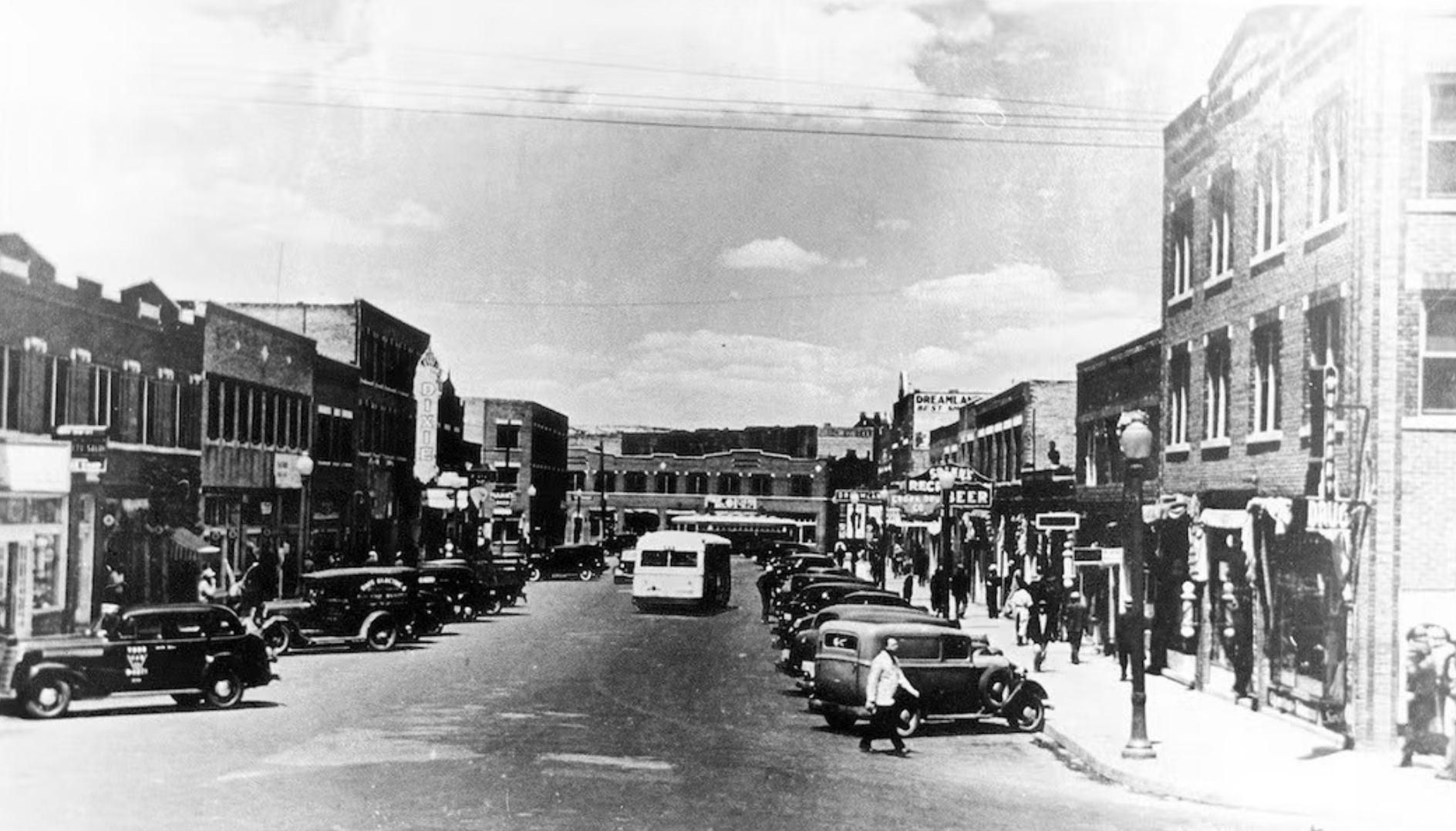
Archer at Greenwood, facing north.
Though Greenwood residents reconstructed with astonishing speed after the massacre, their efforts were continually stymied – not just by violence but by policies that deprived these areas of further opportunities. “The 1921 Tulsa Race Massacre temporarily stilled the economic engines that revved on Black Wall Street. That said, the community quickly rebounded and rebuilt, peaking economically in the 1940s,” Johnson told Stacker in an email. “In the 1960s and subsequent decades, structural factors like integration and urban renewal precipitated a second decline.”
The legacy of Black business districts
Though perhaps the most widely known, Tulsa’s story was not unique.
“Wherever you had large Black populations concentrated because of segregation, you had these enterprising African Americans who sprouted up to provide every need possible,” Dr. Shennette Garrett-Scott, author of “Banking on Freedom: Black Women in U.S. Finance Before the New Deal” and associate professor of history and Africana studies at Tulane University, told Stacker.
Across America, Black entrepreneurs established thriving business districts that faced similar threats from racial violence and discriminatory policies.
From Richmond’s Jackson Ward – known as “the cradle of Black capitalism”– to Detroit’s Paradise Valley, Chicago’s Bronzeville, and Atlanta’s Sweet Auburn, across America, Black entrepreneurs established communities with flourishing enterprises that stood as beacons of economic promise and prosperity.
Stacker used Census data and other sources to explore the untold history of lesser-known Black Wall Streets across the U.S. and how present-day Black business districts strive to rebuild wealth and opportunity in the current economic landscape.
The path to economic freedom
The entrepreneurial spirit of Black Americans can be traced as early as the 17th century, according to the Federal Reserve Bank of Richmond. Even while enslaved, Black Americans would barter and trade their surplus production with other people who were enslaved – though most profits went to their enslavers.
Once freed, Black Americans continued this tradition of engaging in businesses that used the skills valued by white enslavers, including catering and personal services such as tailoring and hair care.
In the decades following the Civil War, Black Americans faced a paradox: newly freed but systematically excluded from mainstream economic opportunities.
Overcoming systemic barriers
This exclusion, though devastating, sparked a wave of Black entrepreneurship across the country. According to the Negro Year Book of 1914-1915, Black business ownership grew from virtually zero in 1863 to over 40,000 enterprises by 1913, while Black homeownership rose from near zero to over 500,000 properties in the same period. This growth occurred despite the implementation of restrictive “Black codes” that required white sponsors for Black business licenses and Jim Crow laws that systematically segregated commerce.
These communities developed sophisticated financial networks, with Black-owned banks providing crucial capital to entrepreneurs routinely denied loans by white-owned institutions.
“What made these Black business districts thrive wasn’t just Black people supporting Black businesses; it was also Black-owned financial networks, Black banks, and Black insurance companies that provided the capital when white institutions refused,” said Garrett-Scott.
Backlash and lasting impact
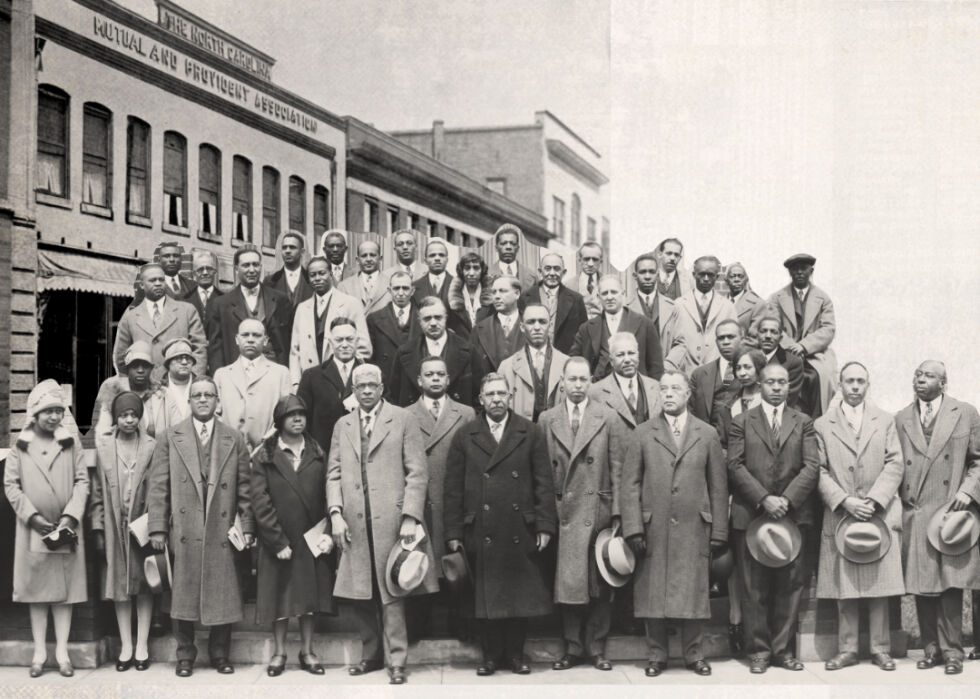
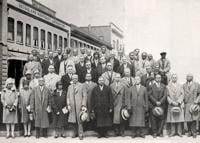
The North Carolina Mutual and Provident Association, founded in 1898 in Durham, NC, was a pioneering Black-owned life insurance company, later known as North Carolina Mutual Life Insurance Company, that played a significant role in the Black community’s economic and social development.
Beyond Tulsa, Black Americans who engaged in economic activity fell victim to racial violence and intentional economic disruption. The East St. Louis Massacre of 1917, caused by white workers targeting their Black peers hired by the Aluminum Ore Company or the Elaine Massacre of Black sharecroppers seeking to unionize in 1919, marked systematic attempts to suppress Black economic independence.
Discriminatory policies compounded the damage. Redlining prevented Black businesses from accessing loans and insurance, while urban renewal projects of the 1950s and 1960s often targeted Black business districts for demolition, displacing established enterprises and fragmenting communities.
“Urban renewal– ostensibly intended to eliminate urban blight – devastated Black Wall Street by displacing individuals and enterprises and gobbling up land,” said Johnson. “Wealth disparities are in large part attributable to the ability to transfer property intergenerationally. Urban renewal adversely affected that dynamic for Black folks.”

The ongoing wealth gap
The dismantling of these Black business districts has had lasting effects on economic progress for Black Americans spanning generations. According to the American Civil Liberties Union’s 2023 Visualizing the Racial Wealth Gap report, the gap in wealth between Black and white families has only grown since the 1970s. In 2018, the median white family of three earned $33,000 more than a Black family of the same size. Black homeownership rates have also stagnated, lagging behind Hispanic homeownership rates and never reaching the 50% mark in the last 10 years.
“We haven’t matched the level of economic destruction that came through those forms of violence and policy violence with the requisite level of economic investment into those communities. Each new generation can fall farther and far farther behind,” Anthony Barr, director of research and impact at the National Bankers Association, told Stacker. Barr’s research specializes in the racial wealth gap, financial wellness, and digitization.
Collective economics
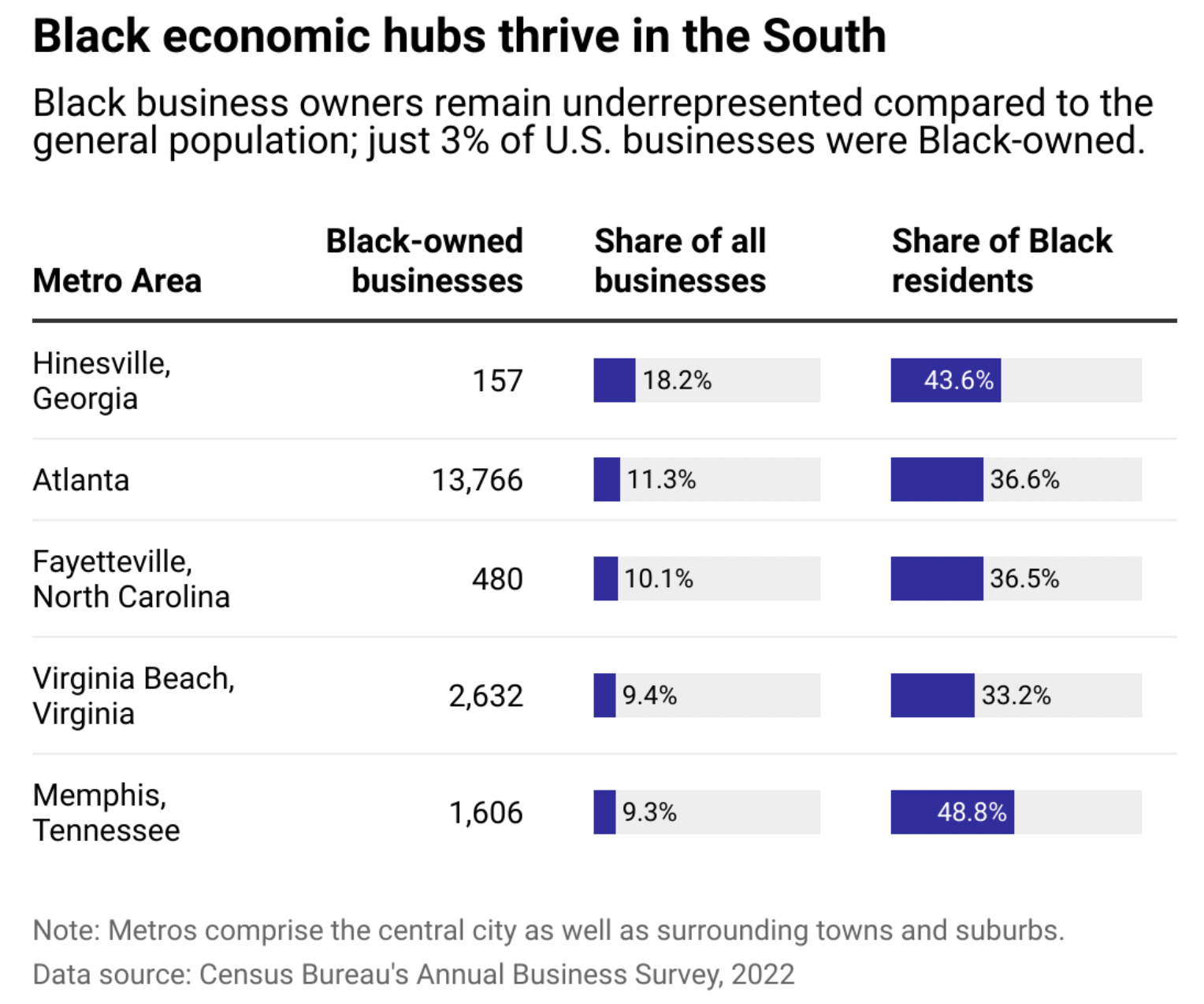
Today’s landscape shows both progress and persistent challenges. Census data reveals that while Black Americans represented about 12% of the population, they owned just 2.4% of American small businesses in 2020. However, data suggests that Black-owned businesses thrive in Southern states. Hinesville, Georgia, leads with 18.2% of companies being Black-owned despite its population only being slightly above 35,000. On the other hand, Atlanta, a larger city with more than 500,000 residents, maintains a strong presence, with 13,766 Black-owned businesses representing 11.3% of all enterprises.
Challenges in accessing capital
Access to capital remains a significant barrier for Black entrepreneurs. According to the Federal Reserve’s 2022 Small Business Credit Survey, Black-owned firms are twice as likely to be denied business loans as white-owned firms. The Census Bureau’s 2022 Annual Business Survey also found that Black-owned firms were less likely to receive the full financing they sought than white-owned firms. Specifically, fewer than 2 in 5 (38.4%) Black-owned firms received all the funding they applied for, while 3 in 5 (62.3%) white-owned firms experienced the same outcome.
The Black Wall Street mindset
These disparities underscore Black entrepreneurs’ systemic and historical barriers to securing necessary funding for their businesses and achieving financial success.
While the challenges remain significant, today’s Black entrepreneurs are building on their predecessors’ legacy of resilience and innovation, working to close the racial wealth gap one business at a time.