

Two years after Glenn Youngkin drew national notice for winning Virginia’s governorship in a blue-trending state, the political world will cast its eyes on Virginia again Tuesday as he seeks total control of the state legislature.
The voter turnout might be comparatively low, with no election for president, governor or congress on the ballot, but the stakes are high.
A year before voters go to the polls to choose a president and members of Congress, politicians and pundits will pore over the Virginia outcome – as well as Ohio’s vote on a proposed constitutional amendment on reproductive rights – for clues as to which issues hit home with voters – such as abortion, parents’ rights, and approach to tax policy.
People are also reading…
“If Democrats maintain control of the state Senate, and especially if they flip the House of Delegates, this would suggest that abortion is still a motivating issue for Democratic voters and the national party could follow this blueprint in the upcoming presidential and congressional elections in an attempt to emulate that success,” said Rebecca Bromley-Trujillo, an associate professor of political science and research director of the Wason Center for Civic Leadership at Christopher Newport University.

Rebecca Bromley-Trujillo
“If the Republican Party is successful in earning a trifecta in the state, whereby they control the governorship and both chambers of the General Assembly, this would indicate that messaging on K-12 education and abortion was effective,” she said.
“More specifically, the focus on parental rights for education, and a 15-week abortion ban (or limit, as Republicans refer to it) with exceptions” for rape, incest and the health of the mother “would be a good model to follow for the national party. Again, if Republicans are successful it would show that an emphasis on a 15-week limit with exceptions comes across as a moderate and palpable stance for voters.”
Youngkin personally has much at stake in his quest to flip Democrats’ control of the state Senate and maintain the GOP hold on the House of Delegates. Beyond the legislation he wants to pass in the rest of his term that ends in January 2026, he has invested significant political capital in the crucial 12 to 15 contests that will settle control.

Governor Glenn Youngkin speaks to the crowd at a campaign rally for Republican candidates in Henrico on Monday, Oct. 23, 2023.
The outcome likely is key to Youngkin’s future prospects, whether – as some big donors still hope – he makes a late entry into the GOP presidential contest, or takes other routes, such as challenging Sen. Mark Warner, D-Va. in 2026, or running for president in 2028.
“For Governor Youngkin, some have argued that he may make a late entry to the GOP presidential primary race if Republicans were successful in earning a trifecta in the state,” Bromley-Trujillo said. “While late entries are typically a long shot, he does have some significant financial backers that may help a late entry.
“Certainly doing very well in the Virginia elections would allow Youngkin to make the case that he appeals to a broad range of voters and that he can be successful in a purple/leaning blue state.”
Marquee local contests
During this year’s legislative session Democrats held a four-seat edge in the Senate and Republicans held a four-seat edge in the House of Delegates.
A crucial Senate race in Henrico County likely is key to the outcome in the chamber. Sen. Siobhan Dunnavant, R-Henrico, who is seeking a third term, faces Del. Schuyler VanValkenburg, D-Henrico, in District 16, a newly configured district that leans slightly more Democratic than Dunnavant’s previous district because it no longer includes a portion of conservative Hanover County.

Sen. Siobhan Dunnavant, R-Henrico, and Del. Schuyler VanValkenburg, D-Henrico, are competing in Senate District 16.
Youngkin’s Spirit of Virginia PAC, which has raised more than $20 million this year, has contributed more than $1.28 million to Dunnavant’s campaign.
“This is a huge race because I don’t see how the Republicans get a majority in the Senate if they can’t keep this Dunnavant seat,” said political analyst Bob Holsworth, a former dean at Virginia Commonwealth University.
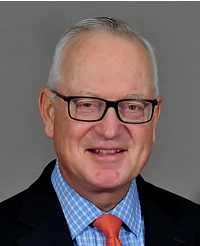
Bob Holsworth
“The governor has put his prestige on the line, he has raised a lot of money, he has been out there in Henrico campaigning vigorously. There’s been a lot of big crowds around the governor’s events. Obviously the Republicans think they still have a chance at this Senate seat.”
Given the Democrats’ edge in the chamber heading into the elections, “they certainly can’t lose a seat where they have an incumbent sitting right now.”

Kim Taylor, R-Dinwiddie, left, and Democrat Kimberly Pope Adams, right, are running for the House of Delegates seat for the city of Petersburg and Dinwiddie, Prince George and Surry counties.
Republicans also are seeking to hold a Richmond-area House seat that will be key to the fight for control of the House of Delegates. Del. Kim Taylor, R-Dinwiddie, faces Democrat Kimberly Pope Adams in District 82, based in the city of Petersburg and in Dinwiddie and Prince George counties.
The race “could well determine control of the House of Delegates,” Holsworth said and it likely will come down to which party can turn out its voters. The district features “a huge geographical divide,” including Petersburg, which is likely to be an Adams stronghold, and rural counties “where the Republican incumbent, Kim Taylor, is going to do very well. This is really a turnout race based on the locality.”
GOP and Democratic leaders will be out in force around the state this weekend, knocking on doors for candidates in key contests, as will interest groups that support each parties’ candidates.
Youngkin, who has already voted early in person, will rally this weekend with candidates in key races in Henrico, Petersburg, Chesterfield County, Suffolk and Virginia Beach and Monday with candidates in Prince William and Loudoun counties.
Maryland Gov. Wes Moore, a Democrat, will cross into Virginia to boost his party’s legislative candidates in Henrico, while the Virginia chapter of Moms Demand Action – which says it backs “gun sense candidates” – will fan out in support of Democrats in key House and Senate contests in Loudoun and Prince William counties.
Other elections
Some Richmond-area residents will resolve additional key issues in addition to elections for the House and Senate.
In Richmond, voters will again vote on whether to back a proposed casino resort in South Richmond, two years after Richmond voters defeated the proposal by fewer than 1,500 votes.
In Hanover County, voters will decide whether the county should popularly elect school board members instead of having them appointed by members of the county’s Board of Supervisors.
Dominoes to fall
Tuesday’s results could quickly lead a number of political dominoes to fall.
Youngkin, who for months has responded to presidential speculation by saying he is laser focused on Virginia’s legislative elections, presumably will make clear whether he intends to mount a late presidential bid.
The candidate filing deadline has passed in a number of early voting states, such as New Hampshire and South Carolina. Virginia is one of 15 states holding GOP primaries or caucuses March 5 on Super Tuesday.
Times-Dispatch Politics Editor Andrew Cain talks with analyst Bob Holsworth on local elections
Virginia is the only state in which governors may not serve successive terms. Candidates who plan to run for governor in 2025 could soon make their intentions known. Rep. Abigail Spanberger, D-7th, is widely expected to forgo a re-election bid for Congress next year in order to seek the Democratic nomination for governor. Richmond Mayor Levar Stoney has also signaled interest in a run for governor.
Republican candidates for governor in 2025 could include Lt. Gov. Winsome Earle-Sears and Attorney General Jason Miyares.
31 photos from the Times-Dispatch archives

In September 1984, the Empire Theatre on Broad Street in downtown Richmond reopened with a gala and performance from the Richmond Symphony. Opened in 1911, the Empire closed and reopened many times since its founding. It is now known as the Sara Belle and Neil November Theatre and is home to the Virginia Rep.

In December 1951, Mrs. Herbert Flax showed her daughter, Susan April, how to light candles on the menorah in celebration of Hanukkah at Temple Beth Israel in Richmond. Flax was chairwoman of Women’s Club gift shop.

In June 1972, residents of a neighborhood in the town of Columbia, in Fluvanna County, stood at the end of a flooded street off state Route 6. The remnants of Hurricane Agnes brought some of the worst flooding in decades to many parts of the state, including Richmond.

In January 1954, Mrs. Elvira Daves (right), postmistress of Sabot in Goochland County, turned over the day’s mail to Mrs. Cy Williams. In the article that accompanied this photo, Daves said she and her husband planned to leave the village soon, and the Williams family would have to find new tenants for the post office and general store.

In January 1973, a young customer explored the offerings at the Carter’s Dry Goods and Notions store on Oregon Hill in Richmond. An accompanying article said the store’s biggest attraction was the penny candy counter — and some of the busiest times were after school, when children streamed in the after getting off the bus.

In September 1945, the sound of the bell summoned students to George Wythe School in Richmond on the first day of class.

In early December 1954, 3-year-old Joe Corman surveyed a row of Christmas trees at a lot off the Petersburg Pike. According to the accompanying caption, these trees were an early shipment from Northern states.

In March 1985, the Diamond was in the late stages of construction. The 12,500-seat baseball stadium on the Boulevard in Richmond was set to open a month later for the new season. Compared with Parker Field, the Diamond offered more seating, concessions, restrooms and boxes where guests could host parties while watching the game.

In May 1965, Lady Bird Johnson played tourist with a movie camera during a trip to Monticello near Charlottesville. The first lady was on a two-day tour of Virginia attractions, in part to promote the beautification of public places. Her trip began with the dedication of the first highway rest area in Virginia on Interstate 95 at Dumfries. After Monticello, she traveled to Abingdon and attended the Barter Theatre.

This December 1984 image shows the Bolling Haxall House on East Franklin Street at Third Street in downtown Richmond. The Italianate mansion, built in the 1850s by one of Richmond’s wealthiest residents, Bolling Walker Haxall, was sold in 1900 to the local Woman’s Club, which remains based there. The building is listed on the National Register of Historic Places.

In March 1964, two Chickahominy tribe members in Charles City County worked on a small farm. Leonard Adkins (left) also was a teacher, and Wilfred Holmes was a student. An article that accompanied this photo reviewed population trends among Virginia’s Indian tribes.

In December 1954, cars on the left side of East Franklin Street near Fifth Street in downtown Richmond weren’t parked — they were stacked up for more than three blocks waiting to turn on Seventh Street or get to a nearby parking garage on Grace Street. This scene was typical for a weekend shopping day during the holiday season.

In September 1948, Richmond men registered for the draft at Chandler Junior High School in Richmond. An accompanying article reported that 9.5 million men ages 18 to 25 were expected to register between mid-August and mid-September in Virginia.

In December 1974, young members of Temple B’nai Shalom lighted candles on the menorah in celebration of Hanukkah. The synagogue, which was on Three Chopt Road in Henrico County, later merged with Temple Beth-El in Richmond.

In December 1973, Hal Weafer stood with one of his Christmas trees – he had been cutting down the fir balsam trees at his property in Maine and delivering them to Richmonders for 50 years. Weafer was a former first baseman for the minor-league Richmond Colts who later became a baseball umpire.

This October 1957 image shows the High’s Ice Cream plant on West Broad Street in Richmond. Founded in Richmond by L.W. High, the company had numerous ice cream shops in Richmond, which were known for their black-and-white checkered floor tiles. The company’s opening-day special in 1932 was buy one Big Cone for 5 cents, get the second free.

In December 1982, a celebration of the seven-day Kwanzaa holiday began at Richmond’s Hippodrome Theater with a reading of the Nguzo Saba, the seven core principles, by Jamil Mulazim. Douglas Weffer (left) and Umar Kenyatta lighted symbolic candles. Kwanzaa, derived from the Swahili term for “first fruits,” was developed as an African-American celebration in the 1960s.

In January 1977, John Warner and Elizabeth Taylor ran through the snow with their dog Daisy. During Warner’s campaign for Senate in 1978, the couple resided in Richmond at the Berkshire Apartments on West Franklin Street. They were married in 1976 and divorced in 1982.


In May 1952, the Richmond Motel, located at Brook Road and Lombardy Street, was undergoing an expansion. The motel opened in February of that year with eight rooms and was adding 26 more.

In January 1973, John and Debbie Nelson were in their junior year at the Petersburg General Hospital School of Nursing. The two decided independently to become nurses, and their paths crossed in 1971 when they were students at Norfolk General Hospital. By October 1972, they were married and transferred to Petersburg General.

In October 1949, an organ grinder and his monkey entertained a young girl at the State Fair of Virginia, held at the Atlantic Rural Exposition fairgrounds. The fair’s array of exhibits and events included motorcycle races, driving safety instruction from the state police and displays of the latest household inventions.

In April 1960, more than 10,000 spectators attended the Richmond Virginians’ exhibition game against the New York Yankees at Parker Field in Richmond. The Vees, part of the International League, played in Richmond from 1954 to 1964 and were the AAA affiliate of the Yankees for much of that span.

In late January 1964, W.M. McDaniel shopped for a pipe at a store in downtown Richmond. An article that accompanied the photo said that for several weeks Richmonders had been favoring pipes over cigarettes in significantly larger numbers, based on tobacco sales. The hypothesis: The Surgeon General’s report that month linked smoking to lung cancer but said cigarettes were worse than pipe smoking.

In September 1976, more than 1,000 rafts, kayaks and canoes crowded into the Jordan Point Yacht Haven and Marina in Hopewell for the second Great James River Raft Race to benefit multiple sclerosis research and local MS projects. The race concluded across the river at Berkeley Plantation in Charles City County. Rafters were awarded prizes for speed, design originality and amount of money raised through pledges.

In December 1966, drivers in a toll lane at the Richmond-Petersburg Turnpike’s Falling Creek interchange were greeted by a cheery holiday message instead of the usual illuminated “go” sign.

In February 1949, W.A. Evans of the Richmond police dusted an empty ring box for fingerprints after a daring robbery of the Schwarzschild Jewelers on East Broad Street in downtown Richmond. The thieves took off with a haul of diamonds, other gems and watches — more than 1,000 pieces — with a value exceeding $200,000. Three men were caught and went to prison, though the search for most of the jewels continued long thereafter.

In March 1963, four men played pool at the Richmond Community Action Program Senior Center at Marshall Street and Brook Road. The center gave seniors access to financial counseling, education classes and other programs.

In March 1957, a boy and girl walked through Chesterfield County farmland with their tools, ready to help with planting. Blossoms on the nearby plum tree were signs of spring.

In February 1952, sexton James R. Eapes rang the bell at St. John’s Episcopal Church on Church Hill in Richmond while the Rev. Robert B. Echols stood by. The toll marked the passing of Britain’s King George VI, whose death that month at age 56 led to worldwide mourning.

In December 1963, workers in the Henrico Christmas Mother campaign sorted gifts of food and toys collected at county schools. The donations were then taken to the welfare department and distributed to needy families. The campaign also was nearing its cash contribution goal of $2,500.

On Christmas Eve 1973, 4-year-old Greg Murphey (front) and 6-year-old brother Scott slept by the fire at their Richmond home — hoping that Santa Claus would make some noise during his visit so that they could catch him at work, filling their stockings and leaving presents under the tree.