

Most of us picture health care as a building. A hospital, a clinic, a waiting room with old magazines. Some of the most useful care in the Black Hills happens at a kitchen table instead.
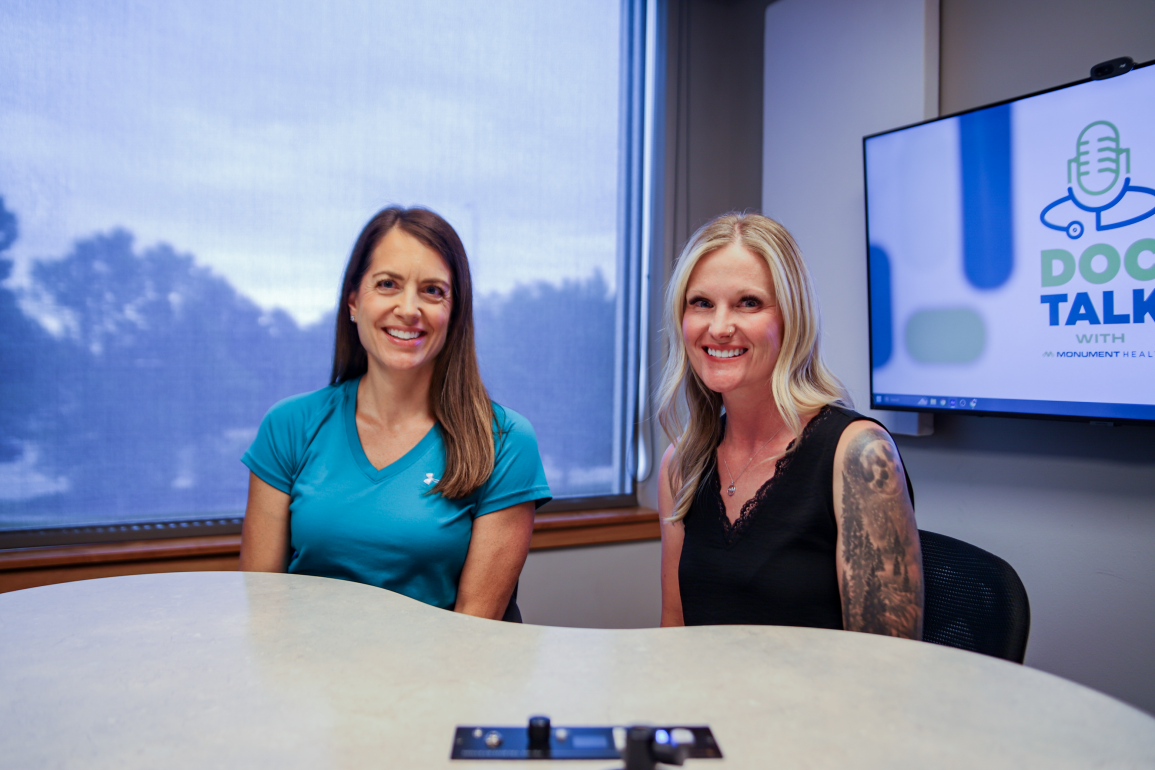
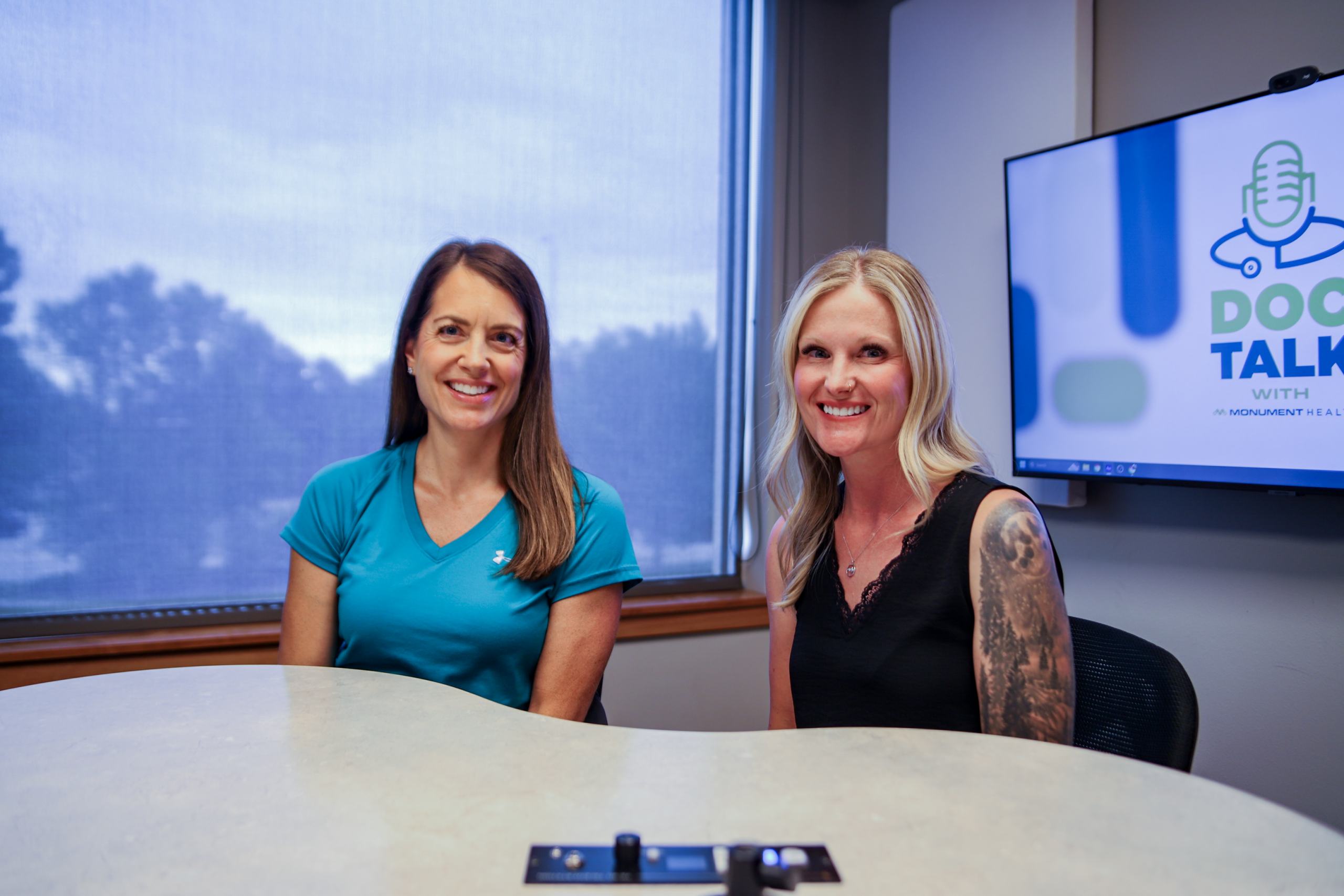
November is National Home Health and Hospice Month. On Monument Health’s Doc Talk podcast, Mark Houston sat down with Beth Graf, a physical therapist out of Spearfish, and Crystal Flinchbaugh, a registered nurse and home health nurse manager.
What home health actually is
Start with what it isn’t.
“There’s a misconception that it’s somebody that comes to your house and sits and visits with you and maybe does housekeeping,” Graf said. “This is skilled care. So you have to have the need of a skill of a nurse, a therapist in order to qualify.”
Flinchbaugh says it opens up after a hospital stay, a surgery, a knee replacement, or a new diagnosis like diabetes or heart failure. A doctor writes the order and the team comes to the house.
“We have pediatric patients sometimes on services up to 102-year-olds,” she said. “That kind of depends on who needs the service. And who qualifies.”
It can also start at a regular checkup. Tell your doctor your legs feel weak or that you’ve been falling, and that conversation alone can trigger a referral.
The thing people get wrong
Around here, folks are proud. You’d expect patients to wave this off. Graf hears something else.
“What I hear more is actually that they didn’t even know it was an option,” she said. “And then when we come into the home, they’re like, wow, this is great.”
Flinchbaugh points to the people who struggle to leave the house at all. That’s one of the qualifiers. When the trip to the clinic is the barrier, appointments get canceled and progress stalls.
“If we go to them, we see better compliance,” Graf said.
What a visit looks like
Nobody knocks unannounced. The first visit runs long: paperwork, billing, medications, and a plan for who’s coming and when. After that, nursing visits look like a hospital assessment. Vital signs, heart and lungs, medication review, wound care, catheter care.
Medicare authorizes home health in 60-day benefit periods for patients who qualify, and the team can recertify someone who needs more time.
Flinchbaugh started doing these visits thirteen years ago, and she pushes back on the idea that it’s a slow-lane job.
“They think it’s a department you go to when you want to slow down,” she said. “You have to know what you’re doing.”
Being in the home also explained the repeat hospital visits she used to puzzle over: food insecurity, or a patient with heart failure living in a motel with a microwave for a kitchen.
Therapy without a gym
Graf has been a physical therapist for twenty-five years, fifteen with Monument. Her workspace might be an old home in Lead with fifteen steps to the front door and no railing. She takes what’s already in the house and turns it into therapy.
Falls are the focus. A throw rug by the door. The wrong shoes. A dog underfoot. The wins are small and cheap: a grab bar, a railing, a bed cane, the right shower bench.
“They can order them off Amazon, their family has them there in two days, and now they’re independent,” Graf said.
Families get help too. Fifty years of doing something one way can hide an easy fix.
Nursing and therapy, same problem
The two disciplines overlap constantly. Therapy looks at safety and equipment. Nursing asks why the falls happen at night, and finds out the patient is up three times to use the bathroom in the dark.
Occupational and speech therapy handle cognition. A memory test might reveal a patient can’t safely manage their own medications, and the nurse adjusts.
Who it covers, and where
The Spearfish office serves Lead, Deadwood, Newell, Belle Fourche, Sturgis and Whitewood, roughly from the Wyoming line to Tilford Road. The Rapid City side picks up Piedmont and Summerset, runs east, and goes as far south as Edgemont. About forty-five to fifty nurses and therapists work the Hills.

For Medicare patients who qualify, Flinchbaugh says the service is covered 100 percent.
“It doesn’t hurt to have your doctor send a referral,” she said. “We can come out to the home, make that assessment. If you qualify, take the services, because that’s what we’re here for.”