

Kezia Jackson struggled through a rough time as a teenager. Her parents arranged for her to talk to a therapist.
In the very first session, the therapist flippantly told Jackson why she believed she was acting out.
“I was uncomfortable and offended, and I shut down,” Jackson says. She felt judged. She never went back, and her depression went untreated. She decided in high school she wanted to become a psychologist.
Jackson ended up earning her doctoral degree in psychology. In 2018, she started Healing Spaces Psychological Services, a private practice in Clayton that now employs 14 people, nearly all of whom are Black.
That’s rare considering the dearth of Black mental health providers — around 2 percent of psychiatrists and 4 percent of therapists in America, according to estimates by the American Psychiatric Association. It’s even more unusual considering that Jackson never recruited other practitioners.
People are also reading…
Instead, they found her.
Drawn to Healing Spaces
Patrick Charlier sought a therapist after a suicide attempt in his mid-20s. Charlier, who is Haitian American, connected with a Black woman, who gave off “motherly energy,” he says. It was exactly what he needed at that moment.
“She made a tremendous difference in the quality of my life going forward,” he says. So much so, that he decided to get his master’s degree in Mental Health Counseling. It took about five years of going to school while working. He moved to St. Louis from New York in 2020. When he met Jackson, he was drawn to the cohesion and flow of her practice.

The founder of Healing Spaces wants the group practice to become more involved in the local community.
“It just felt like a very safe space to work,” he says. He focuses mainly on couples counseling and more than half his clients are Black.
“There’s no monolith experience of being Black, brown or white,” he says. But, he can relate to the cultural context of being a racial minority in America. “It’s one of those things where sometimes what’s understood doesn’t have to be explained,” he says.
His colleague, Anita Santiago, a doctoral student and licensed clinical therapist, said she wanted to enter the field because of her family’s personal history with mental illness. She witnessed firsthand the hardship of trying to get an accurate diagnosis and finding a provider who accepts Medicaid, especially for those who live in rural areas.
“I know the years of struggle and pain that comes with being misdiagnosed and misunderstood, especially in communities of color,” Santiago says.
She switched careers at 48 — when she began a master’s degree in counseling — and enrolled in her doctoral program at 52. She wanted to be part of a team providing culturally competent care.
“We’re not just slapping a label on someone,” she says.
Nicole Murdock, a therapist and staff manager at Healing Spaces, remembers reading a book in middle school that changed her life. “A Child Called It” is a memoir of one of the most severe child abuse cases in California history, in which a boy was severely beaten, tortured and starved for years by his mother.
“It really opened my eyes,” Murdock says. Growing up in the African American Baptist church community, she said therapy was never discussed.
“You prayed it away. Jesus would solve all your problems. Therapy was not a thing at all,” she says. When she first got into the profession, she did not know a single Black psychiatrist and just a handful of Black therapists. She was used to being the only Black person in many educational and work spaces.
Before she met Jackson in 2020, it had not occurred to her that they could build something different.
“It felt like we were in a system that was already the way it was,” she says. Jackson began talking about a different way to engage with the community, and it made sense to her.
“We can create this,” she says.
Confronting the past
Dr. Stephen McLeod-Bryant, president of Black Psychiatrists of America, notes that Black providers are significantly underrepresented in medicine, overall. He points out that Black people were not allowed to study medicine for much of the country’s history. It was not until 1966, after the passage of the Civil Rights Act, that African Americans were admitted into all U.S. medical schools. White institutions denied generations of Black people the opportunity, along with the economic and social resources, from participating in medicine, he says.
The recent Supreme Court decision banning affirmative action has already led to a decline in the number of Black and Hispanic medical students, he says. The push to ban efforts to diversify the medical workforce hurts all Americans, McLeod-Bryant says. “It takes away brains and innovation that can bring better health care to all Americans.”
His organization has started a mentoring program to match medical students and residents with senior psychiatrists.
The field of psychiatry carries a racist, oppressive and abusive history that has led to historical distrust among Black Americans. In 2021, the American Psychiatric Association issued an apology for its “appalling past actions” and apologized for its racist past.

Dr. Russell Ledet will be triple board certified in pediatrics, psychiatry and child psychiatry when he completes his residency and fellowship at the University of Indiana Medical School.
“The history of psychiatry has not been kind to Black people. It has not been kind to Black people, at all,” said Dr. Russell Ledet, a resident in pediatrics, psychiatry and fellow in child psychiatry at Indiana University School of Medicine. Black people are more likely to be diagnosed with schizophrenia and other psychotic disorders and less likely to be diagnosed with depression and anxiety despite similar symptomatology, he says. They are less likely to be referred for therapy and more likely to be sent to emergency rooms and correctional settings. Black children are more likely to be suspended and criminalized than treated for therapy or psychiatric care.
“I’m reframing therapy as a tool of liberation and not as weakness,” he says. “Every time a black patient sees someone who looks like them in a mental health space, it sends a powerful message — that we deserve healing, too.”
Ledet is the co-founder of the nonprofit 15 White Coats, which mentors and encourages more Black students to apply to medical school. He’s also doing Afro-centric and culturally adaptive psychotherapy in youth incarceration facilities. He uses rapper Kendrick Lamar’s lyrics to teach Black boys about anger, and how the response to it is learned. He is teaching them about authenticity, family, loyalty, relationships and resiliency from a culture he shares.
“I wanted to explain it in a way I never heard psychiatry explain it,” he says. “People are not coming to therapy to lose who they are; they are coming to better understand who they are.”
The work goes beyond individual patient care to addressing the hurdles built into the system, he says. The barriers to mental health care are vast — lack of insurance, higher out-of-pocket costs, fewer providers who accept Medicaid, extremely long wait times for those who do, finding transportation and being able to take time off work for regular sessions. Even the medical forms, filled with jargon and difficult to understand, can alienate families looking for help, he says. He wants to reimagine what the screening tools for depression and anxiety sound like to make them more applicable to diverse populations.
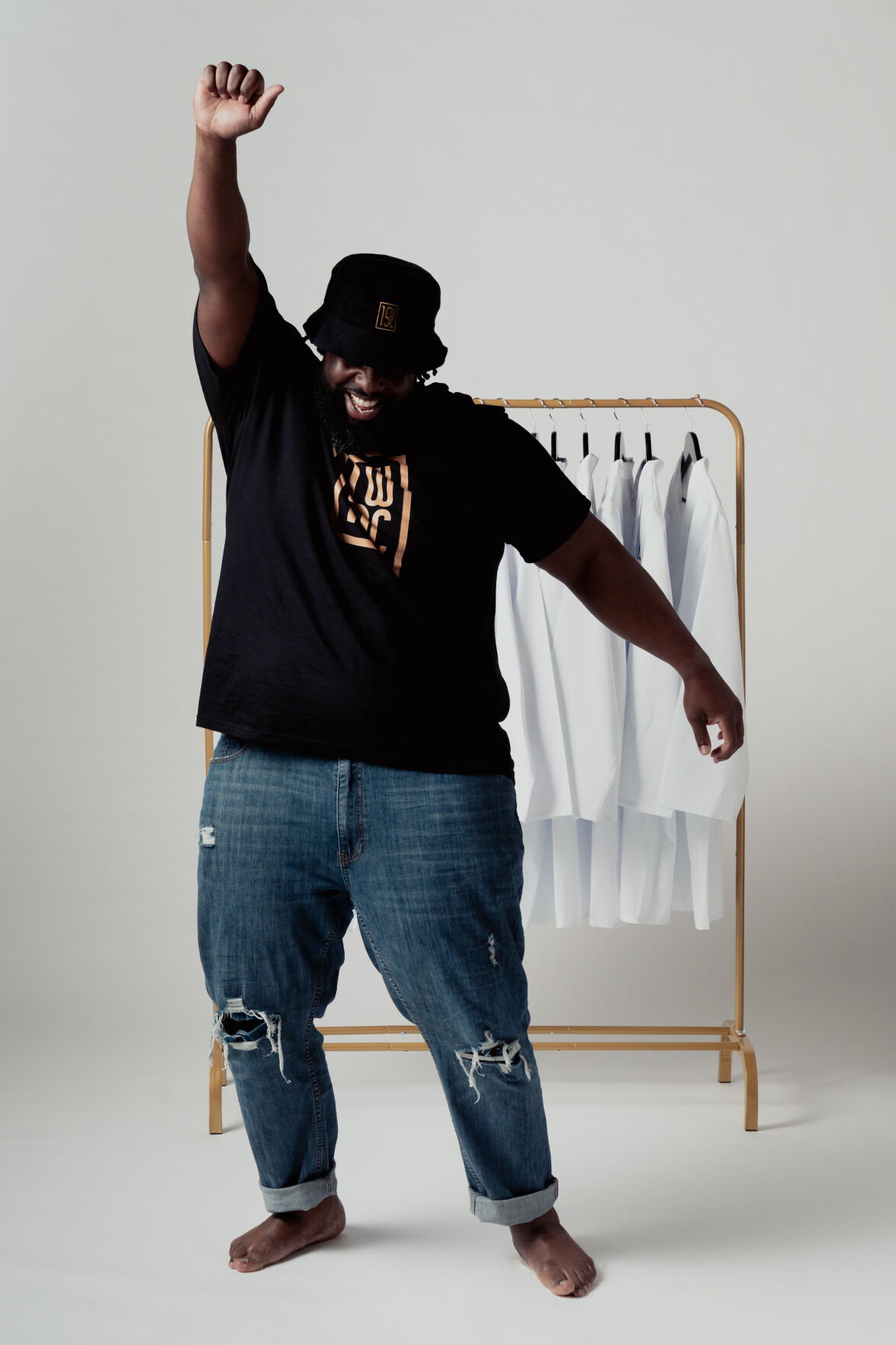
Dr. Russell Ledet founded the nonprofit 15 White Coats to encourage and help more Black students to apply to medical school.
“There are a lot of built-in inequities for mental health care that I want to address over time,” Ledet says. “It’s incredibly important for me to create a space that helps people from communities where I came from and tells them they are important and includes their culture.”
In St. Louis, Jackson is pursuing the same goal.
Looking to the future
It wasn’t until she was in graduate school, when Jackson was particularly stressed and anxious, that she tried therapy again. This time, she found the right fit — a woman, similar to her in age from the same background. This therapist engaged her in what her healing and treatment would look like.
“It allowed me to put some guards down,” Jackson says. She was able to get the help she needed.
Jackson knew the demographics in her field and was aware there would not be many people who looked like her. But it was still jarring to work for community health organizations that served predominantly Black and brown people and to be the only Black psychologist on staff. She noticed the failure to diagnose Black children with certain mental health conditions and label them as behavior problems. The impact of culture was largely ignored.

That became especially apparent after the shooting of Michael Brown in Ferguson and the unrest that began a nationwide movement about racial injustice.
“An email went out, and then it was business, as usual,” she says. There was so much happening in their backyard, but no one in leadership was talking about it or how it was impacting their clients, she says.
“We can’t pretend this is not happening,” she thought. When another Black therapist talked about starting her own practice, Jackson started contemplating the same move.
“I wanted to create a space where people who looked like me could come in and feel safe and get the healing they need and feel acknowledged,” she says.
In her business, she prioritizes creating a diverse, inclusive space that fosters cultural competency. Many Black clients seek her out because they want to ensure their child is not being misdiagnosed or over-pathologized. Those from other marginalized communities come because they want a place where they won’t be judged, she says. And, there are people who come because they know what they stand for and agree with the mission.
She never had the plan of creating a large group practice. Providers approached her and said: “I heard what you’re doing. Can I do it with you?”
Now, she has a new vision.
“I see us continuing to do the work, not just within these walls, but in St. Louis,” she says. She wants to equip people with the skills to build their own healing spaces — in homes, schools and their communities. Some mental health care providers want to become the person who could have been there for them when they were younger, she says.
That’s exactly where her journey has led her.