

4-minute read
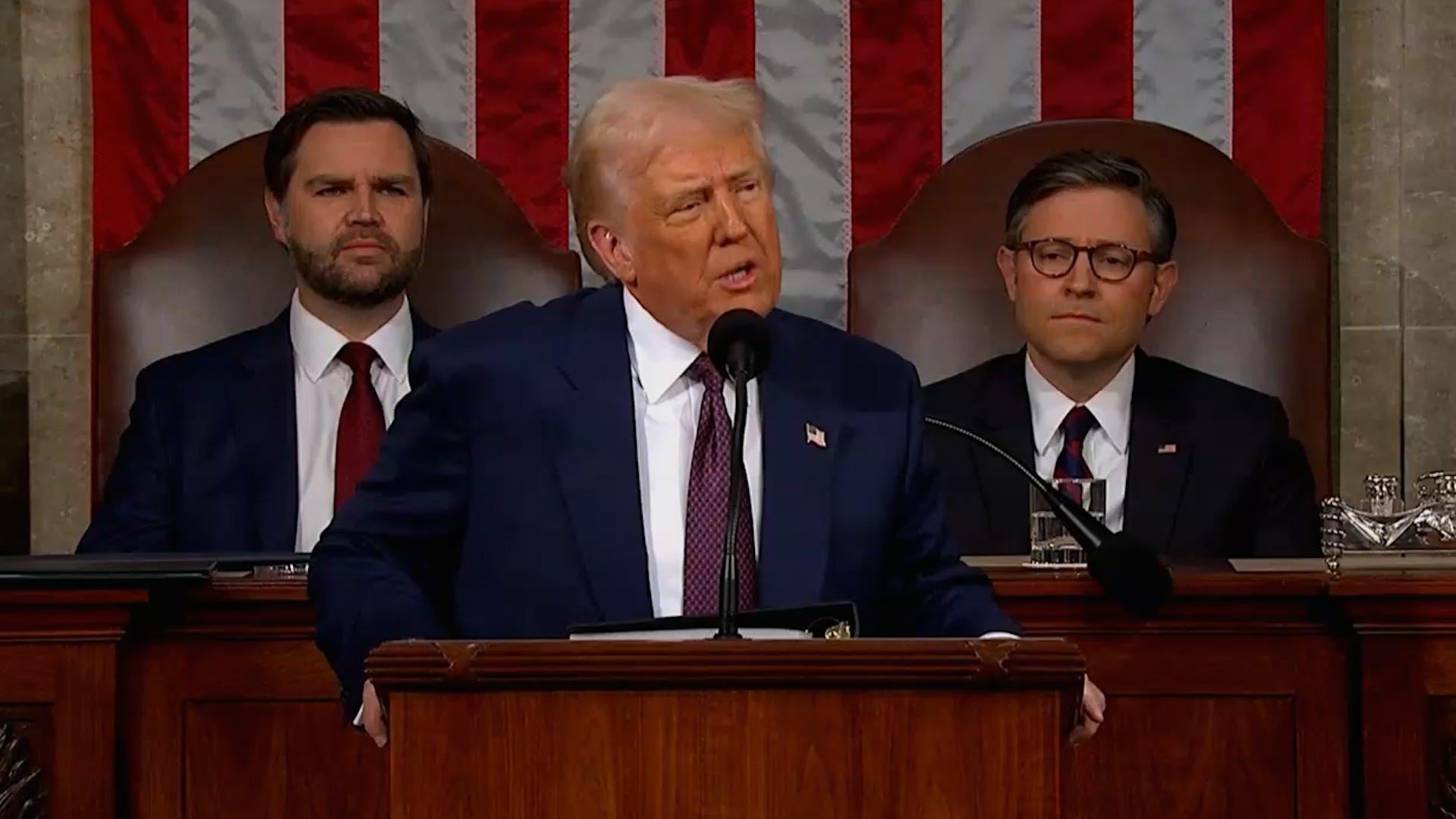

President Trump begins address to Joint Session of Congress
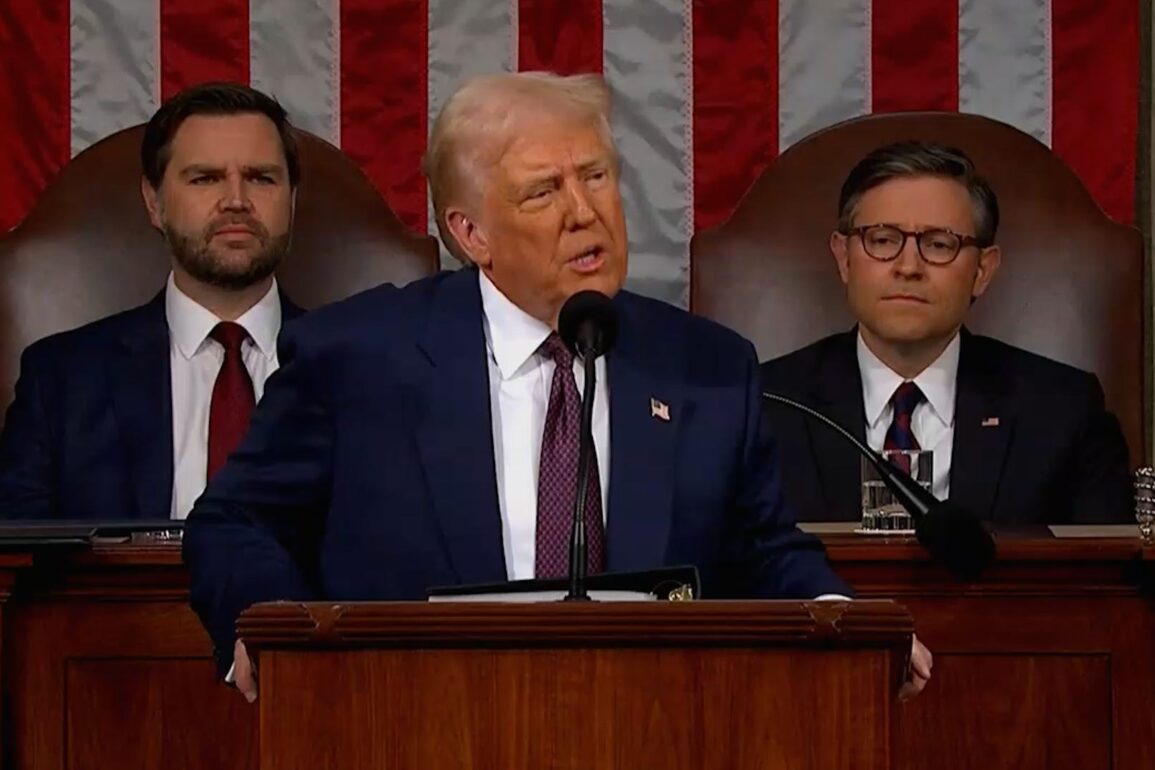
“We are just getting started.” President Donald Trump begins his address to a Joint Session of Congress.
- The author reflects on the state of American politics during former President Donald Trump’s second term.
- The author criticizes both Democrats and Republicans for their behavior during and after Trump’s presidency.
- The author expresses concern about the loss of civility and the inability to engage in meaningful political discourse.
- The author criticizes Trump’s behavior, including his policies, falsehoods and treatment of Ukrainian President Volodymyr Zelenskyy.
Dear Trump Nation:
Are you happy now?
I posed that question in a column four years ago, on Jan. 6, 2021, the day President Donald Trump’s followers attacked the U.S. Capitol, assaulting cops, breaking windows and trashing legislative offices in an effort to overturn a presidential election that Trump lost. As we approach the 50th day of Trump’s second presidency — and especially in light of the president’s speech Tuesday night to a joint session of Congress — it’s important now to ask another question.
What have we become?
But let’s not limit this to Trump’s followers. It’s time for Democrats to join in this reflection and ask themselves that same question.
Consider this scene less than five minutes into Trump’s more than 99-minute address: Trump was in the midst of proclaiming that “America’s momentum is back” and that “the American Dream is surging — bigger and better than ever before.” Then, he turned to last November’s presidential election, describing his victory as “a mandate like has not been seen in many decades.”
To be sure, this statement bordered on exaggeration — and that’s being kind. Trump’s victory margin over Democrat Kamala Harris was just 1.6%, according to the U.S. Federal Election Commission. But this kind of fact-bending is typical of Trump. He governs the way he ran his casinos years ago in Atlantic City. Marketing and especially attention-getting statements are part of the playbook. Truth is a movable feast.
A Black man was ejected from the House of Representatives while white people cheered
Trump had barely uttered the words “American Dream” when Rep. Al Green, a 77-year-old Democrat from Houston, was on his feet, waving his cane and shouting at Trump: “You have no mandate to cut Medicaid!”
Because of what happened next, it’s important to note that Green is African American.
Trump paused as Green shouted. And as quickly as you can say, “Let’s play ball,” the overwhelmingly white contingent of Republicans on the other side of the House chamber drowned out Green with rhythmic chanting of “USA! USA!” and “Sit down.” Had the House of Representative been remodeled as a football stadium? Was this a presidential address or a pep rally?
Good question. House Speaker Mike Johnson banged his gavel and told Green he would be removed if he continued interrupting Trump. But Green did not sit or stop speaking in a tone and manner that bordered on the kind of trash-talking that passes for dialogue in the National Basketball Association. A few minutes later, the House sergeant-at-arms escorted Green from the chamber — a Black man being tossed out of a room while hundreds of white people cheered.
Dear America: What have we become?
Green was wrong in his heckling. Let’s not ignore that. There is a time for forceful political debating. This was not one of them. This was a time to listen. Let Trump have his moment on stage. You can react later.
Most Democrats seemed to sense that. Before Trump’s speech, party leaders were encouraging Democrats to maintain some semblance of dignity inside the House chamber. The feeling was that Democrats did not want to sink to the kind of verbal insults that House Republicans Marjorie Taylor Greene of Georgia and Lauren Boebert of Colorado tossed at President Joe Biden during his State of the Union address last year.
But it happened, nonetheless. Al Green took on the persona of Marjorie Taylor Greene. And, in turn, Republicans jeered.
The moment, while brief, is nonetheless significant. It is yet another reminder that far too many of our elected leaders — maybe ordinary Americans, too — have lost their ability to talk to each other.
Trump is no angel on this point. Let’s be clear about that. He provokes in ways that demand some sort of pushback. In his speech, he dug up his degrading put-down of U.S. Sen. Elizabeth Warren, the Massachusetts Democrat who claims to have Native American ancestors. Trump, in his best 5th-grade schoolyard voice, called her “Pocahontas.” On their side of the House chamber, Republicans laughed.
These early weeks of his presidency offer plenty of other examples of Trump overstepping what should be basic lines of reasonable politics. How about his outlandish plan to seize the Panama Canal? Or Trump’s blatant score-settling that includes his reckless order to remove federal bodyguards from critics like former national security adviser John Bolton, who has been targeted by Iran for assassination?
Let’s also not rule out Trump’s penchant for rule-bending, either. Exhibit A here is the still-unexplained efforts by Trump’s handpicked cronies at the Justice Department to dismiss federal corruption charges against New York Mayor Eric Adams in return for Adams’ promise to sidestep his city’s self-proclaimed sanctuary status and round up undocumented immigrants.
And let’s not forget Trump’s own mandate that allowed Elon Musk and his team of computer geeks to blast into the federal bureaucracy with threats to fire thousands of workers and demands that thousands of others write memos explaining their jobs — or face dismissal. Question: How do you threaten to fire people without first understanding what they do? (Maybe Musk can put down the chainsaw he waved before a conservative crowd to demonstrate his budget cutting and actually offer a thoughtful answer. While Musk is doing that, maybe he can lose the black T-shirts, too.)
We cannot forget the relentless stream of lies from Trump
And finally, there are Trump’s falsehoods. Sadly, the list is already long. But the highlights range in recent weeks from the irresponsible to the weird.
For example, without evidence, Trump blamed federal diversity programs for a plane crash over the Potomac River that killed nearly 70 people. He claimed that Ukraine started the war with Russia and that U.S. foreign aid included the delivery of $50 million in condoms to the Gaza Strip. To name a few.
On Tuesday night, Trump told several head-spinners. He claimed that “it’s been stated by many” that the first month of his presidency “is the most successful in the history of our nation.” Many? How many?
Trump added that George Washington’s first month as president came in second place. According to? Trump did not say.
“I don’t know about that list,” he noted. “But we’ll take it.”
Keep in mind that this is the president talking.

The television coverage continually showed Republicans smiling, even laughing, as Trump spoke. But let’s not be surprised by this. Trump is the epitome of politics-as-entertainment. Even before his speech, White House press secretary Karoline Leavitt was saying the “joint address will be must-see TV.”
Just like a football game. Or an awards ceremony. Or a trial. Or a reality-TV show like “The Apprentice,” which Trump once hosted. In the end, it all blends together for Trump. Think of it as the presidency as reality TV.
Trump raised the TV theme just days before he spoke to Congress when he and Vice President JD Vance openly argued at the White House with Ukrainian President Volodymyr Zelenskyy. The verbal skirmish was broadcast on live TV — to the world, including those gleeful warmongers in Russia.
Actually, it was a deeply painful moment. Here was an American president and vice president openly berating the leader of a much smaller nation who is trying to defend his country against brutal Russian aggression. At stake were the lives of millions of people.
But Trump had another interpretation at the end.
“This is going to be great television,” he said.
Which brings us back to that question: What have we become?
In the end, answering that question may be the hardest challenge for Republicans and Democrats as they live through Trump’s presidency.
Mike Kelly is an award-winning columnist for NorthJersey.com, part of the USA TODAY Network, as well as the author of three critically acclaimed nonfiction books and a podcast and documentary film producer. A paperback edition with an updated epilogue of his 1995 book, “Color Lines,” which chronicles race relations in a small New Jersey town after a police shooting and was called “American journalism at its best” by The Washington Post, was released last year. To get unlimited access to his insightful thoughts on how we live life in the Northeast, please subscribe or activate your digital account today.
Email: kellym@northjersey.com