

She also highlighted the “interconnectedness of social, economic, and environmental justice” as part of the Encyclical letter’s theological framework that can be used to advocate for ecological reparations.
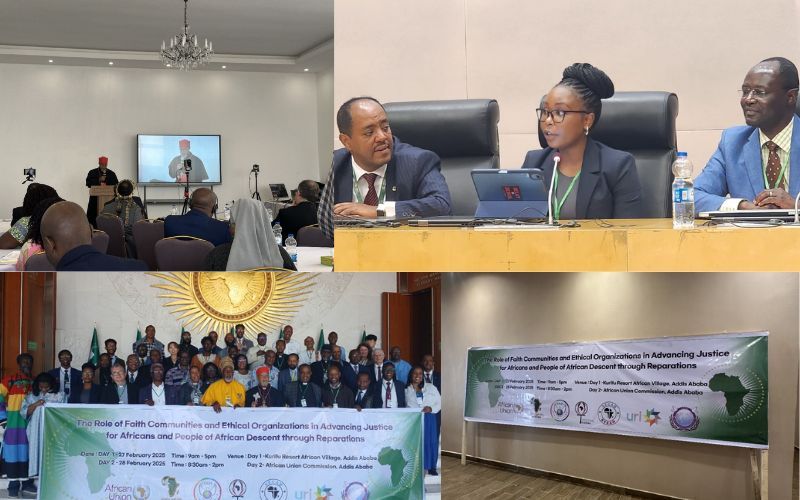
Laudato Si’ emphasizes the “ethical responsibility among wealthier nations and corporations to mitigate their ecological impact and contribute to restoration efforts,” the Kenyan Catholic environmentalist said at the event held at the Kuriftu Resort African Village and the African Union Commission (AUC) in Addis Ababa, Ethiopia.
Members of the Symposium of Episcopal Conference of Africa and Madagascar (SECAM) organized the workshop in collaboration with the African Union (AU) Catholic Chaplaincy, Heavenly Culture, World Peace, Restoration of Light (HWPL), and the Pan African Conference on Ethics and Bioethics (COPAB).
Other partners in realizing the convention included the Interreligious Association for Peace and Development (IAPD-Africa), the United Religions Initiative (URI), and the Citizens and Diaspora Directorate (CIDO) of AUC,
The workshop was aligned to the AU 2025 theme, “Justice for Africans and People of African Descent through Reparations.”
According to a February 26 press release, the workshop that brought together AU officials, diplomats, religious leaders, scholars, human rights advocates, and policymakers to advance the AU’s reparations agenda focused on historical injustices emanating from the Trans-Atlantic Slave Trade, slavery, and colonization.
The event also sought to promote healing and reparations for the communities that fall victim to the legacies of slavery, colonization, apartheid, and genocide, which, according to the press release, continue to impact many African communities.
In her February 28 presentation, Ms. Kitisya said that the concept of ecological debt is deeply intertwined with the historical injustices committed against Africa during the dark ages of colonization.
“Africa has long borne the brunt of environmental degradation and climate change despite contributing the least to global emissions,” Kitisya said.
She added, “The extractive industries, deforestation, and pollution often driven by colonial-era economic structures and continued exploitation by multinational corporations have left lasting scars on the continent’s ecosystems and communities.”