

The racial reckoning of 2020 ushered in an unprecedented number of reparations commissions, in Boston and beyond, as longtime advocates seized a once-in-a-lifetime moment to hold the government accountable for the centuries of harm inflicted against African Americans since slavery.
In Boston, the city’s task force is deep in the throes of its own years-long process of compiling research on the legacy of slavery to eventually issue sweeping recommendations on how the city can reckon with its past.
But now, more than two weeks into a second Trump administration that has already targeted diversity efforts in universities and businesses, advocates for reparations are fearful that years of gains could be erased with the signing of an executive order, a bill from the Republican-controlled Congress, or a decision from the conservative courts.
“Maybe we’ll be a lucky city where there will be no lawsuits,” said Joseph D. Feaster Jr., chair of the Boston reparations task force. “But I’m not sure that’s going to be the case.”
The expectations of prolonged battles with the federal government and conservative groups opposed to such initiatives, coupled with President Trump’s war on DEI, has some advocates strategizing on how to protect their programs from legal threats.
While his administration has yet to make any formal statements against reparations for Black Americans, Trump has in the past made his stance pretty clear. In a 2019 interview, the president said, “I don’t see it happening.” Despite voicing his opposition to reparations, Trump has floated redistributing funds seized from institutions with DEI initiatives as reparations to “victims” of these policies.
The new administration’s possible opposition would be just the latest roadblock for the Boston reparations task force, which launched in 2023 and was initially slated to submit recommendations at the end of 2024.
The task force, which is still in the first phase of its efforts to recommend recompense to Black Bostonians, has been slammed by some residents who’ve pushed for more urgency and criticized by city councilors who have called for more transparency in the process. Scheduled public meetings have been scattered, and some have been canceled with little notice. And the number of task force members has shrunk from 10 to six.
Last fall, the task force selected 26 grantees to do grassroots work such as gathering research and recording oral histories to supplement any findings, and a city spokesperson said it has distributed roughly $40,000 of the $70,000 total.
At the task force’s most recent meeting in late January, the group unanimously approved hiring an economist to put a dollar amount to the harm against Black Bostonians. Attendees also heard a presentation from a team of Tufts University and Royall House and Slave Quarters researchers, one of two research teams tapped by the task force to study the slavery’s long lasting legacy in Boston. (Northeastern University, the other research team, presented findings in December.)
The researchers argued that even after Massachusetts abolished slavery, most formerly enslaved people could only attain meager employment and the city’s elite profited from the slave trade in areas where the practice was still legal.
Meeting attendees said they appreciated the research, but some worried the researchers were overlooking slavery’s legacy in certain profitable sectors in of Boston’s history, such as banking and insurance. Others said the research failed to include descendants of people who came to Boston during the Great Migration, and instead focused on people whose families were enslaved in the Boston area.
It’s unclear when the research will conclude, as Feaster said he has asked Mayor Michelle Wu to again extend the deadline into June, citing the breadth of the Tufts University research team’s 320-year assigned period.
“Everyone says, ‘Hurry up, hurry up, we need to do this,’” Feaster said. “You’re asking us in two or three years to address something that has been around for 400 years.”
Across the nation, the work of municipal reparations groups has concluded, slowed, or paused altogether. The devastation of Tropical Storm Helene put the Community Reparations Commission of Asheville, N.C., on hold until the spring.
In St. Louis, the city’s reparations commission issued recommendations in a 124-page report, including direct-cash payments, zero-interest loans, and Black businessowners grants. It’s unclear if or when any of these suggestions, published in October, will be implemented.
Last year, California became the first state to file legislation based on the results of its reparations study. The state’s governor signed a handful of the bills, including one that required lawmakers to issue a formal apology for the state’s history of “racial prejudice through segregation, public and private discrimination, and unequal disbursal of state and federal funding.”
Before Trump took office last month, conservative challenges to existing reparations programs were already emerging across the United States. Republican legislators in Tennessee introduced a bill that would have banned any cities from issuing reparations or funding studies on reparations for its residents, although it was later killed in session. US Representative Brian Babin of Texas introduced federal legislation that would bar states or municipalities with reparations programs from receiving federal bailouts.
Perhaps the most notable direct threat came from the conservative foundation Judicial Watch, which filed a civil lawsuit last spring against Evanston, Ill., for using race as eligibility in its reparations program for Black residents. Judicial Watch president Tom Fitton said it’s not out of the question that the group could target Boston’s efforts.
“If Boston began a program that engaged in the type of race discrimination that Evanston is, they can expect litigation either from Judicial Watch or other victims,” Fitton said. “I would hope the writing’s on the wall as to where these programs should be going, which is into the ash heap.”
Robin Rue Simmons, a former Evanston alderwoman who now leads the national reparations group FirstRepair, said the city asked the courts to dismiss the legal challenge. The court’s decision is pending, but she’s hopeful.
“Reparations are attainable; they are constitutional,” she said. “They have been delivered to other communities.”
Simmons said she had anticipated legal threats as soon as the program was approved in 2019, and looped in the city’s legal department early in the planning process. She recommended that municipalities exploring similar work do the same, and not use “pass down dollars” from federal or even state governments to fund reparations.
Other government-appointed reparations groups, such as the one in California, tried to fend off conservative lawsuits by avoiding race-based eligibility on its own in cases involving direct compensation. Instead, the task force chose to narrow cash payments to descendants of enslaved people in the US, and incorporated other parts of the Black community in its broader recommendations, such as health care and criminal justice reform. Task force member Kamilah Moore said their criteria were shaped by the then-impending Supreme Court affirmative action decision, which struck down race-based college admissions the same day as the body’s final meeting.
“We made the right decision with lineage-based [reparations] because if we chose race-based, our last meeting would’ve been somber,” Moore said. “Not to say we were happy with the Supreme Court’s decision, but we were living to fight another day.”
Despite these protocols, Priscilla Flint-Banks, whose nonprofit, the Marcus Anthony Hall Educational Institute, was among those selected by Boston to collect oral histories of Black Bostonians, said she isn’t sure if social justice-oriented nonprofits will receive as much support now that Trump is in office.
“The way Donald Trump is rolling, I don’t think he wants us to get anything,” Flint-Banks said. “This is something that we have to fight.”
Advocates who have pushed for reparations in Boston, such as Reginald L. Jackson, a Simmons College professor emeritus of communication, agree that continuing such work — no matter how long it takes — is a necessity in the path toward healing and justice.
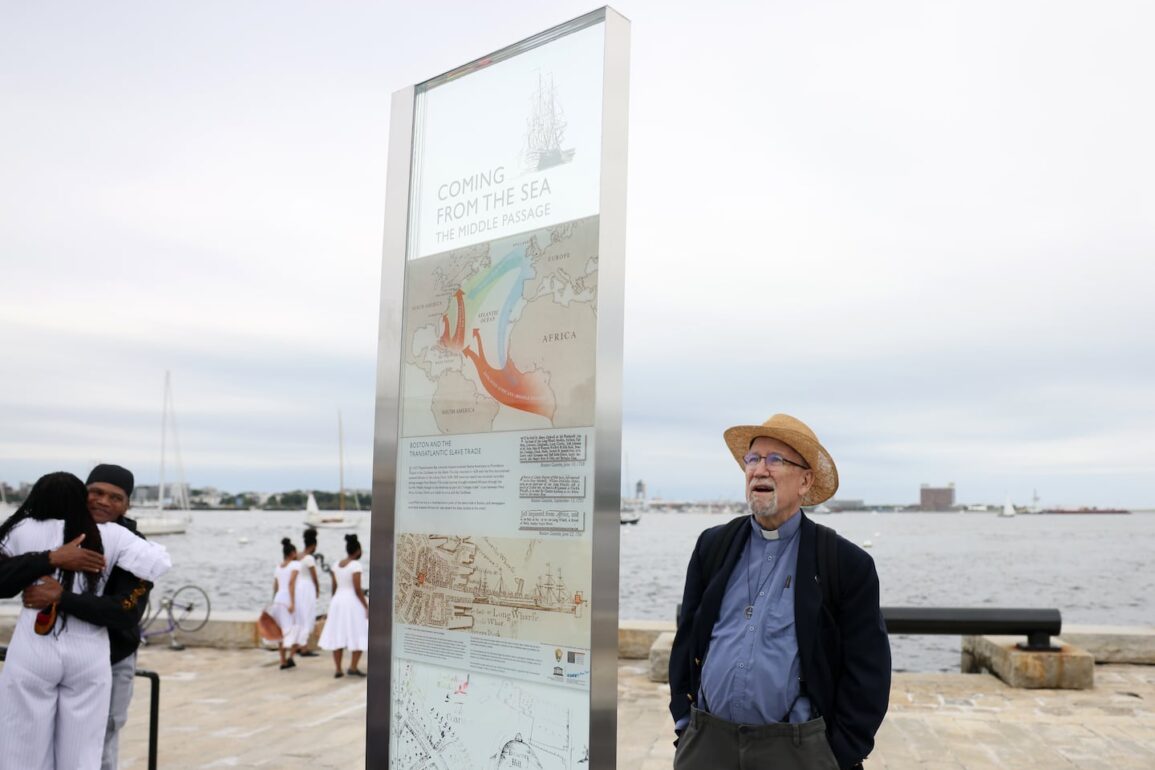
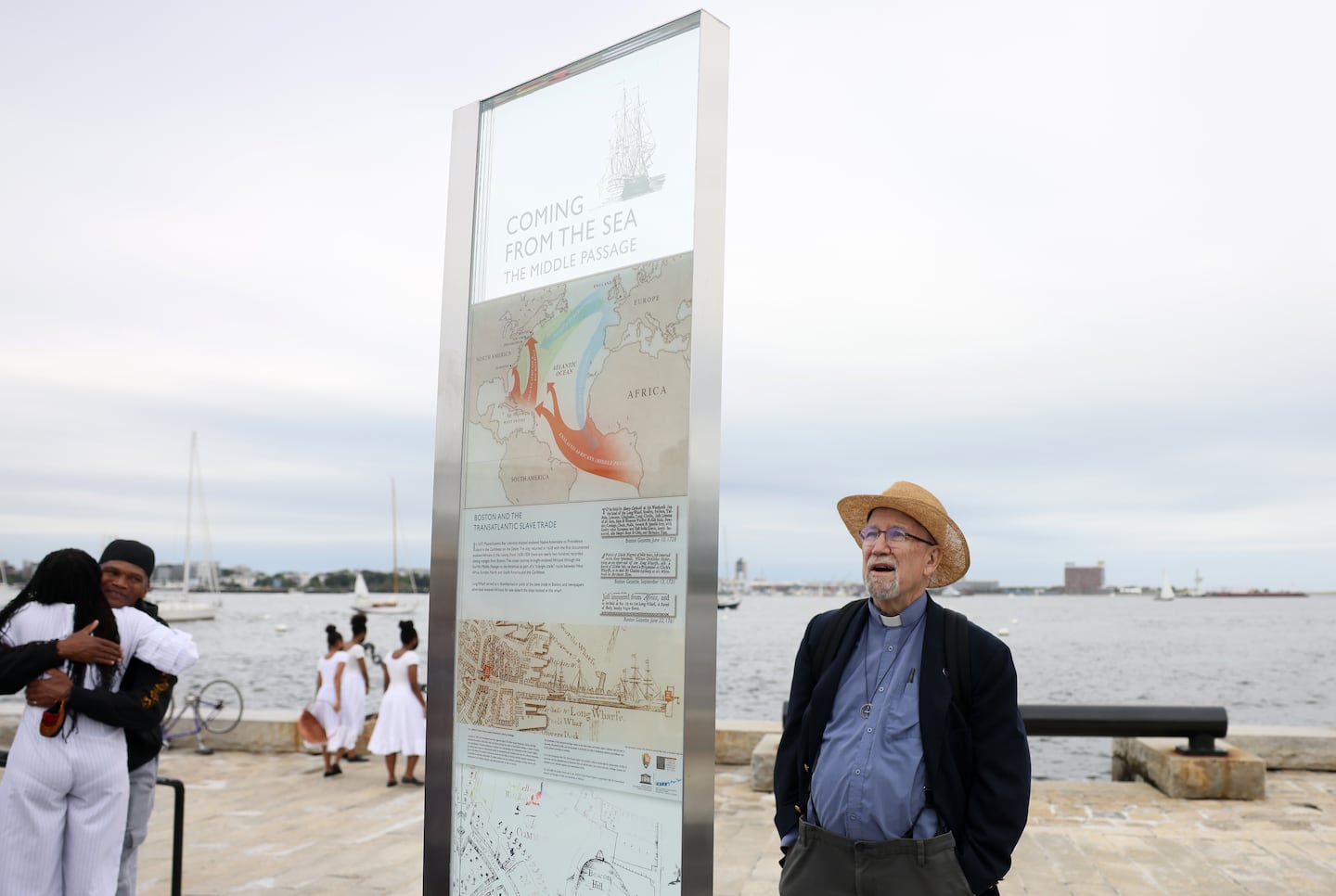
Jackson has worked for decades to install a Middle Passage marker on Spectacle Island, a 100-acre island in Boston Harbor that played an historic role in the story of George, a Black man who attempted to escape from slavery by stowing away on a ship. While held captive on the island by a captain who discovered him, George broke away and attempted to boat to South Boston.

Jackson finally had a breakthrough last fall, in the form of a $2,500 grassroots partnership grant from the Boston reparations task force.
It’s a significant milestone for a decades-long dream, he said, but he can’t help but wonder how much more progress he’ll receive under the new administration.
This story was produced by the Globe’s Money, Power, Inequality team, which covers the racial wealth gap in Greater Boston. You can sign up for the newsletter here.
Tiana Woodard can be reached at tiana.woodard@globe.com. Follow her @tianarochon.